
Cricket Clothing & Whites Buying Guide: What to Wear for Every Format
On this page
Introduction
Cricket clothing rarely gets the same attention as a bat or pair of shoes, but ask any player who's batted through a full session in the wrong fabric on a hot, humid afternoon, and they'll tell you it matters more than most people assume. Restrictive clothing affects your bowling action, uncomfortable fabric distracts during long innings, and clothing that doesn't manage sweat properly becomes genuinely uncomfortable — and even chafing-prone — over a full day's play.
This guide covers what actually differentiates good cricket clothing from generic sportswear, how to choose whites for traditional formats, and what fabric technology genuinely matters versus what's just marketing.
The Common Problem: Treating Cricket Clothing as Generic Sportswear
Many players — particularly at club and recreational level — wear whatever athletic clothing is available rather than cricket-specific kit. The issue is that cricket involves a unique combination of movements: explosive sprinting between wickets, extended periods of low-intensity standing in the field, full-extension bowling actions, and sudden diving or lateral movement. Generic gym or running wear isn't cut or constructed for this specific mix of demands, and it shows over a full match — through restricted movement, poor sweat management, or fabric that simply doesn't hold up to repeated diving and sliding.
Why Purpose-Built Cricket Clothing Matters
Mobility across multiple movement types. Cricket clothing needs to support a full bowling action's shoulder rotation, a batter's explosive running between wickets, and a fielder's sudden dive — often within the same session. Four-way stretch fabric, cut with articulated seams at the shoulders and hips, genuinely improves range of motion compared to standard cotton sportswear.
Sweat and heat management. Indian cricket seasons overlap significantly with hot, humid conditions across most of the country. Moisture-wicking fabric pulls sweat away from the skin to the fabric surface, where it evaporates faster — this matters enormously over a full day's play compared to cotton, which absorbs sweat and stays heavy and damp.
Durability against repeated diving and sliding. Fielding involves regular contact with turf, grass stains, and occasional hard ground contact. Cricket-specific fabric blends are generally more resistant to abrasion and tearing than standard casual sportswear.
Understanding Cricket Whites
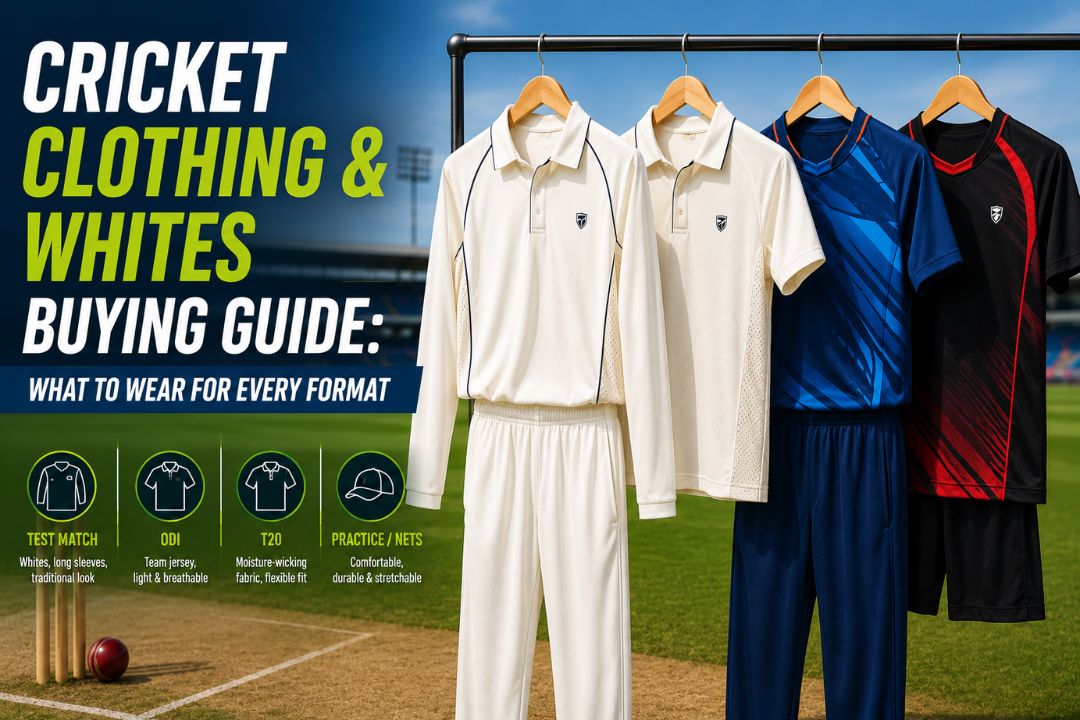
Traditional whites remain standard for longer-format matches — school, club, and first-class cricket — and choosing the right whites involves more than just picking a white-colored shirt and trousers.
Fabric weight matters for the season. Lighter fabric blends (polyester-cotton mixes around 130–160 GSM) are more comfortable in India's hot months, while slightly heavier fabric provides more durability for regular, intensive club-level use.
Full sleeves vs half sleeves. Full-sleeve shirts offer more sun protection for fielders spending long hours in direct sunlight, while half sleeves offer more freedom of movement and better heat dissipation — a genuine trade-off depending on your role and personal preference.
Stain resistance and washability. Whites inevitably pick up grass and turf stains. Fabric treated for easier stain release (a feature increasingly common in mid-range and premium cricket whites) genuinely reduces the maintenance burden over a season of regular wear, compared to basic untreated cotton-blend whites.
Colored Kits for Limited-Overs Cricket
For T20 and ODI-format club and league cricket, colored kits have become standard, and the fabric considerations shift slightly:
Lighter, more breathable fabric is often prioritized in limited-overs kit design, since matches are shorter but often more physically intense in bursts (explosive running, aggressive fielding).
Moisture-wicking technology matters even more here, since colored fabric can show sweat patches more visibly than white, making genuine sweat management fabric a practical as well as comfort consideration.
Fabric Technology: What's Genuinely Useful vs Marketing
Four-way stretch is a real, meaningful feature — it allows fabric to stretch in multiple directions rather than just along the seams, genuinely improving comfort during a full bowling action or a diving stop.
Moisture-wicking treatment is also a real, functional benefit — properly wicking fabric measurably reduces the "wet and heavy" feeling of sweat-soaked cotton over a long session.
Anti-odor or antimicrobial treatments offer modest, genuine benefit for hygiene over multi-day tournaments where washing between matches isn't always possible, though the effect diminishes somewhat after repeated washing.
"Cooling" fabric claims should be evaluated skeptically — while breathable, moisture-wicking fabric does feel cooler than cotton in practice, extreme "cooling technology" marketing claims often overstate the actual measurable temperature difference.
Gear Recommendations by Format and Role
Traditional format (whites) players: A lightweight polyester-cotton blend shirt and trousers, full sleeves for fielders spending extended time in direct sun, with stain-resistant treatment if available within budget.
Limited-overs (colored kit) players: Prioritize moisture-wicking, lightweight fabric given the higher-intensity, shorter-duration nature of these formats.
Bowlers specifically: Look for clothing with articulated shoulder seams and stretch fabric across the back and shoulders, since the bowling action places repeated stress on this area more than any other cricket movement.
Wicketkeepers: Prioritize clothing with maximum hip and thigh mobility given the constant crouching and lateral movement — restrictive fabric here directly affects reaction speed.
Women players: Fit and cut matter as much as fabric technology — our women's cricket gear guide covers clothing sizing and fit alongside the rest of the kit.
Practical Buying Tips
● Buy slightly looser rather than skin-tight, particularly for bowlers — clothing that's too fitted restricts the shoulder rotation needed for a full bowling action.
● Check fabric composition, not just brand name. A polyester-cotton blend around 65/35 or 70/30 generally offers the best balance of breathability, durability, and stretch for most players.
● Wash whites separately and promptly after matches to reduce staining — grass and turf stains set faster and become harder to remove the longer they sit. Our full gear maintenance guide covers the complete post-match routine, not just clothing.
● Invest in at least two sets if playing multiple matches per week — allowing proper drying and washing between uses extends the lifespan of moisture-wicking treatments significantly.
Buying Guide: Clothing by Playing Context
Playing Context
Recommended Fabric
Sleeve Style
Traditional whites, hot climate
Lightweight poly-cotton blend
Half sleeve (unless high sun exposure)
Traditional whites, extended fielding
Lightweight poly-cotton blend
Full sleeve
Limited-overs colored kit
Moisture-wicking synthetic blend
Half sleeve
Bowlers (any format)
Four-way stretch blend
Full or half, articulated shoulders
Wicketkeepers
High-stretch, hip/thigh mobility focus
Half sleeve
Conclusion
Cricket clothing is functional equipment, not just uniform — the right fabric and cut genuinely affect comfort, mobility, and performance over a full day's play, particularly in India's hot and humid playing conditions. Prioritize moisture-wicking, four-way stretch fabric over basic cotton, choose sleeve length based on your role and sun exposure, and don't underestimate how much a properly fitted, purpose-built kit improves comfort compared to generic sportswear.
Explore cricket clothing at SportsGear24x7 — moisture-wicking, stretch-fabric options across brands and sizes for every format.
Frequently asked questions
What fabric is best for cricket whites in hot climates?
A lightweight polyester-cotton blend (around 130–160 GSM) offers the best balance of breathability and durability for hot, humid conditions common across most of the Indian cricket season.
Should I choose full sleeve or half sleeve cricket clothing?
Full sleeves offer better sun protection for fielders spending long hours in direct sunlight, while half sleeves provide more freedom of movement and better heat dissipation — the choice depends on your role and personal sun sensitivity.
Does moisture-wicking cricket clothing actually make a difference?
Yes, genuinely. Moisture-wicking fabric pulls sweat away from the skin and evaporates faster than cotton, noticeably reducing the "heavy and damp" feeling during long sessions, particularly in humid conditions.
How do I remove grass stains from cricket whites?
Treat stains as soon as possible after the match — the longer grass and turf stains sit, the harder they are to remove. Cold water rinsing followed by a stain treatment before regular washing works best; avoid hot water, which can set stains further.
What's the difference between traditional whites and limited-overs colored kits?
Traditional whites are used in longer-format matches (Tests, first-class, and many club/school formats) and are typically lighter-weight for extended wear, while colored kits used in T20/ODI formats often prioritize moisture-wicking performance fabric given the higher-intensity nature of shorter matches.