Women's Cricket Gear Guide 2026: How to Choose the Right Equipment for Performance & Safety
10 min read


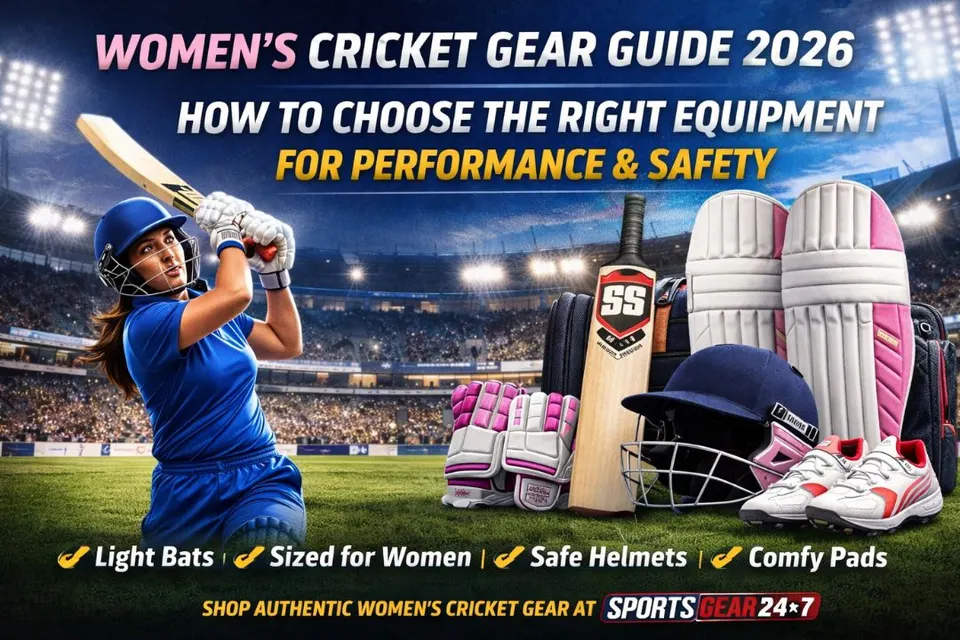
Women's cricket is no longer a niche conversation. With packed stadiums at ICC Women's events, rising grassroots participation across India, and more brands finally building gear specifically for female athletes, 2026 is the best time to level up your kit. Whether you're a school-level player stepping into your first inter-district match or a club regular looking to upgrade from hand-me-down men's gear, this guide breaks down everything you need to know — from picking the right bat to understanding which protective gear actually fits a woman's body.
One of the most common mistakes female cricketers make is purchasing standard men's gear and hoping it works. It doesn't at least not well. Women's cricket has specific equipment standards set by the ICC, and more importantly, women's bodies have different proportions that demand differently shaped protective gear.
The key differences to understand:
Bat size: Women's cricket bats are slightly shorter and narrower than men's. The standard women's bat has a blade length of up to 33.5 inches, compared to the men's standard of 38 inches. A shorter bat means better control for players with smaller frames and shorter arms.
Protective gear: Leg guards (pads), gloves, and chest guards designed for men are often oversized and poorly fitting on most women. Ill-fitting pads restrict movement and can actually cause injury by shifting out of position at the point of impact.
Helmets: Head circumference and jaw structure differ, so a men's helmet that technically "fits" may still leave dangerous gaps around the grill.
Your bat is an extension of your game. Choosing the right one comes down to weight, grade, and handle type.
Weight: Most women prefer a bat between 1lb 2oz and 1lb 5oz (approximately 510–590g). A lighter bat allows for faster swing speed, better timing, and less fatigue during long innings.
Willow Grade: Bats are graded 1 through 5 (or similar, depending on the brand). Grade 1 English Willow is the top-of-the-line choice for serious club and professional players — it has a better grain structure and lasts longer. Grade 3 or Kashmir Willow is perfectly suitable for beginners and offers great value.
Handle: Oval handles give better control for vertical drives; round handles offer flexibility. For women with smaller hands, look for a short-handle (SH) bat — this is the standard for women's cricket.
Who to buy from: Brands like SG, SS, DSC, and MRF all make high-quality bats across different price points. Explore the full range of cricket bats at SportsGear24x7 — there are options with up to 25% off across top brands.
Pro Tip: Always knock in a new bat before match play. Oil it lightly with raw linseed oil and use a mallet or an old ball to gradually compress the willow fibres.
Batting gloves are among the most contact-critical pieces of gear you own. A poor-fitting glove reduces bat control and increases the risk of finger fractures.
What to look for:
Fit: The glove should feel snug but not constricting. Fingers should reach the fingertips without bunching. Women with smaller hands often find junior gloves fit better than ladies' sizes.
Padding: Look for high-density foam or rubber padding over the index and middle fingers of the top hand — these take the most impact from deliveries.
Palm material: Leather palms grip the bat better and are more durable. Synthetic leather is a cost-effective alternative.
Velcro cuff: A good wrist strap keeps the glove in place throughout the innings.
Browse the full selection of batting gloves at SportsGear24x7 — stocked with gloves from SG, SS, DSC, Moonwalkr, and more.
Leg guards are arguably the most important piece of batting equipment after the bat itself. A cricket ball traveling at 80+ km/h hitting an improperly fitted pad can fracture your shin.
Key fit considerations:
The knee roll should sit at your kneecap — not above or below it
The pad should cover from mid-shin to just above the knee
When strapping the pad, it should feel secure but allow you to bend your knee freely and run without the pad shifting
Women's pads are typically narrower and lighter than men's versions
Materials: Modern pads use high-density foam cores with PVC or leather facings. Look for lighter materials if you play on slower, lower-bounce surfaces where heavy pads are unnecessary.
Shop all batting leg guards online at SportsGear24x7 with options from leading brands at up to 20% off.
Never compromise on your helmet. Since 2017, the ICC has mandated that helmets meet the British Standard BS 7928:2013 certification. This standard tests for impact resistance, the size of the gap between peak and grill, and the structural integrity of the shell.
Fitting a helmet correctly:
The helmet should sit level on your head, not tilted back
There should be no more than 25mm gap between the peak and the grill
The chinstrap should hold the helmet in place without excessive movement
The helmet should not rock forward over your eyes when you move your head down
Grill vs. full-face: Full-face helmets are recommended for junior players and those new to facing pace bowling. Grill helmets are standard for most adults.
Brands to consider: Shrey and Moonwalkr make some of the most technically advanced helmets available in India, offering lightweight shells with advanced foam liner systems. Explore the complete cricket helmets collection at SportsGear24x7.
Many female cricketers skip chest guards, arm guards, and thigh pads — either because they don't know they exist or because their kit bag doesn't have them. These are not optional extras. They are injury-prevention essentials, especially if you're facing fast bowling.
For a deep dive into why these items matter and how to choose the right ones, read our detailed guide: Cricket Thigh Pads, Arm & Chest Guards Explained — Who Needs Them & Why.
Quick breakdown:
Chest guard / inner guard: Worn inside the shirt, protects ribs and sternum. Women-specific versions account for chest shape and provide far better coverage than men's equivalents.
Arm guard: Protects the forearm of the bottom hand, which is particularly vulnerable during off-side play and when playing on the back foot.
Thigh pad: Two thigh pads are standard — one inner (worn under the trousers) for the front leg and an outer pad for the back leg. Essential against pace and short-pitched bowling.
Abdominal guard: Women's abdominal guards, also called a "cup" or "belly guard," provide targeted protection for the lower abdomen.
Browse all cricket protection gear at SportsGear24x7.
Footwork is the foundation of batting, and the right shoes make a measurable difference to your movement, balance, and injury risk. Women's cricket shoes follow the same principles as men's, but sizing and width options matter.
Spikes vs. rubber studs:
Spikes (metal): Best for natural grass surfaces — county grounds, turf wickets. Provide superior grip during the bowling run-up and when batting on damp pitches.
Rubber studs: Ideal for synthetic and hard surfaces like astroturf. Many club players use these for all-round versatility.
What to look for:
Ankle support — high-cut shoes reduce sprain risk for bowlers
Cushioned midsole — especially important for fast bowlers landing on the crease
Reinforced toe box — protects against toe injuries when batting
For a detailed breakdown of choosing cricket footwear for your playing role, check out our blog on best cricket shoes for fast bowlers. The same principles around grip, support, and surface-matching apply to all players.
Shop all cricket footwear at SportsGear24x7 — including options from ASICS, New Balance, SG, and more with up to 35% off.
Women's cricket clothing has evolved significantly in recent years. Modern playing kits use moisture-wicking polyester fabrics that keep you cool, dry, and comfortable through long innings and hot afternoons.
What your kit should include:
Playing shirt (short or long sleeve depending on conditions)
Playing trousers or skirt (both are acceptable at most levels)
Inner compression shorts/tights — these go under pads and reduce chafing
Cap or sun hat — sun protection matters over a 50-over game
Tip: If you're buying inner shorts, choose ones with a pocket or integrated pouch designed for a thigh pad insert — this keeps the inner thigh pad in place throughout your innings.
Browse cricket clothing at SportsGear24x7 for the latest range from top brands.
A good kit bag makes match day logistics infinitely easier. Look for a bag with:
Dedicated bat pocket(s) that don't bend or warp the blade
Ventilated compartments for sweaty gear
Separate shoe compartment to avoid contaminating clothing
Padded straps — backpack-style bags are easier to carry across grounds
Explore all cricket kit bags at SportsGear24x7 — models from SG, SS, DSC, and more.
The good news: most major cricket brands now offer gear specifically sized and designed for women. The brands that consistently perform well across quality, fit, and value include SG, SS, DSC, Moonwalkr, Shrey, and MRF. For a comprehensive breakdown of each brand's strengths across different product categories, read our detailed review: Top Cricket Equipment Brands for 2025: SG, SS, MRF, SF, Kookaburra & More.
The rapid growth of women's cricket across India and globally means the gear available to female cricketers today is more thoughtfully designed and more widely available than ever before. The most important things to remember: fit matters more than brand, safety gear is never optional, and your bat should feel like an extension of your arm — not a tool you're wrestling with.
Whether you're shopping for your first complete kit or upgrading a specific item, explore the full range of equipment at SportsGear24x7 — with authentic products from India's top cricket brands, a 7-day return policy, and dedicated customer support.
Q: Do women need a special cricket bat, or can they use a men's bat? Women can technically use a short-handle men's bat, but a bat designed for women's cricket will be lighter and slightly shorter — which translates to better control and less fatigue. Most women find a bat in the 2lb 2oz–2lb 6oz range ideal.
Q: What size leg guards should I buy for women's cricket? Most women's leg guards are labelled as "ladies' " or "women's" size. When trying them on, the knee roll should align exactly with your kneecap. If it sits higher or lower, the pad will shift during play and leave vulnerable areas exposed.
Q: Is a chest guard mandatory in women's cricket? It's not mandatory at most levels, but it is strongly recommended — particularly when facing pace bowling above 70 km/h. A well-fitting chest guard can prevent serious rib injuries from balls that seam or swing unexpectedly.
Q: Can I buy all my cricket gear in one kit? Yes. Complete cricket kits at SportsGear24x7 are a cost-effective way to get started. These bundles include a bat, gloves, pads, helmet, and bag. They're ideal for new players who want a complete set at a single price point.
Q: How often should I replace my cricket equipment? Helmets: every 5–7 years, or immediately after a significant impact. Gloves and pads: when padding flattens noticeably. Bats: when the edges crack through to the splice or the toe begins to split despite proper maintenance.
Q: Which cricket ball is used in women's cricket? The women's cricket ball weighs between 140 and 151 grams (versus 155.9–163g for men's). It's slightly smaller in circumference, which affects grip and swing. If you're practising at home, use a ball within this weight range for realistic match preparation. Browse cricket balls at SportsGear24x7.
The SportsGear24x7 Editorial Team is a group of passionate cricket enthusiasts and equipment specialists based in New Delhi, India. With over a decade of experience in the cricket gear industry, our team has helped thousands of players — from beginners to state-level competitors — find the right equipment for their game. Every article we publish is backed by real product knowledge, on-ground player feedback, and deep understanding of the Indian cricket ecosystem.