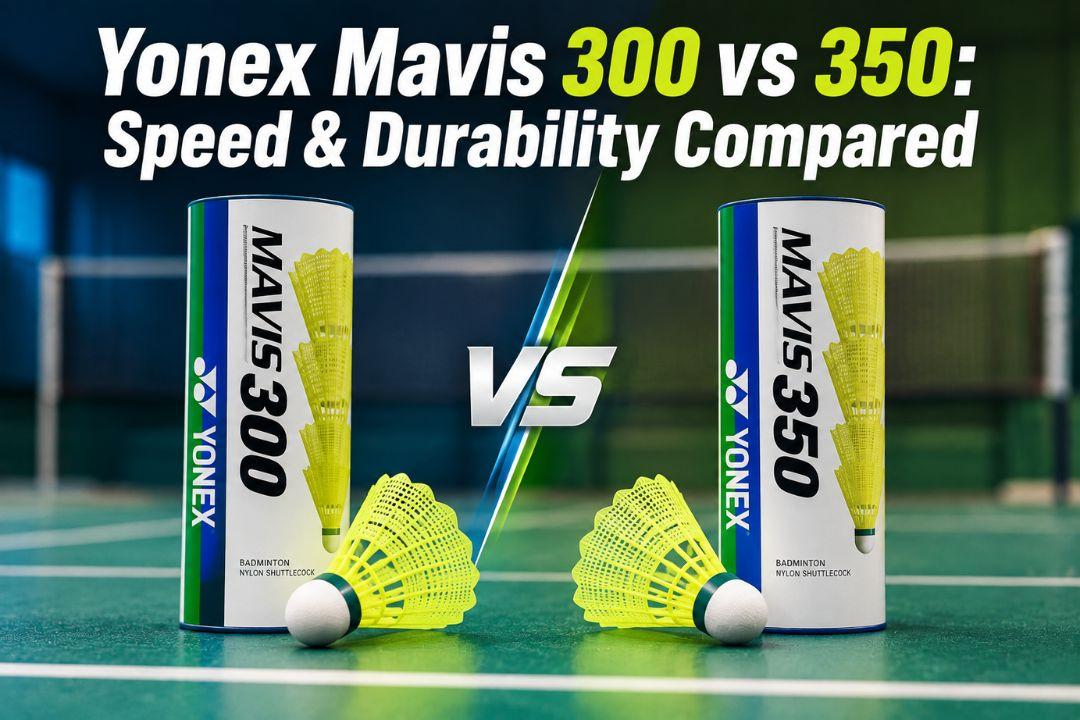

QUICK ANSWER The Yonex Mavis 350 is the more durable, slightly better-flighted option built for regular club play and semi-competitive sessions, while the Mavis 300 is the budget-friendly choice ideal for casual play, beginners, and high-frequency practice where shuttles wear out fast regardless of quality. |
Nothing derails a good badminton session like a shuttlecock that starts wobbling mid-flight or has feathers — well, nylon skirt segments — bent out of shape after just 15 minutes of smashes. Beginners especially tend to blame their own inconsistent shots when erratic flight is actually the shuttle breaking down. Buying the wrong grade for your play frequency either wastes money (over-buying premium shuttles for casual knockabouts) or hurts your game (under-buying durability for serious training).
Unlike a racket or grip, a shuttlecock is consumed, not owned long-term — its flight characteristics change every single session as it takes impact after impact. A shuttle with a damaged skirt flies unpredictably, throwing off a player's read on trajectory and making it impossible to practice consistent shot placement. For players working on technique, a stable, predictable shuttle is what lets you actually trust your eyes and adjust your swing — inconsistent shuttles teach bad compensation habits.
The Mavis 300 is Yonex's entry-level nylon shuttle, built with a reliable nylon skirt and cork base that delivers consistent flight for its price point. It's the shuttle of choice for casual games, school and college play, and players who go through large volumes of shuttles during practice, where cost-per-shuttle matters as much as performance.
• Best for: Beginners, casual games, high-frequency hitting drills, budget-conscious buyers
• Trade-off: Slightly shorter lifespan and less refined flight stability compared to the 350
The Mavis 350 sits a notch above, with a more durable nylon skirt construction and a flight profile that more closely mimics feather shuttles. This makes it the preferred choice for club sessions, regular training groups, and players who want their practice shuttle to behave predictably even after sustained hitting.
• Best for: Club players, regular training groups, players prepping for tournament-style play
• Trade-off: Higher price per tube than the Mavis 300
• Match shuttle speed to your local conditions. Yonex Mavis shuttles come in speed grades (typically 76, 77, 78) — higher altitude or warmer halls need a slower speed rating, while cooler, low-altitude venues need faster speeds. Buying the wrong speed grade will make your shots feel "off" regardless of shuttle quality.
• Rotate shuttles within a session for smash-heavy drills — using one shuttle for 100+ smashes will degrade its flight and give you false feedback on your shot accuracy.
• Store tubes upright and in a cool, dry place — heat and humidity soften the cork base and nylon skirt faster than normal wear.
• Use the Mavis 300 for warm-ups and multi-shuttle drills, and switch to the Mavis 350 for point-play or technical sessions where accurate flight feedback matters most.
Factor | Mavis 300 | Mavis 350 |
Durability | Good | Better |
Flight stability | Good | Closer to feather-shuttle flight |
Best use | Casual play, high-volume drills | Club sessions, competitive practice |
Value per tube | Best budget option | Slightly higher, better performance return |
Recommended for | Beginners, schools, recreational players | Intermediate to advanced club players |
Rule of thumb: If you're playing socially once or twice a week, the Mavis 300 covers your needs comfortably. If you're training 3+ times a week or playing in club leagues, the Mavis 350's extra durability and flight consistency will save you money and frustration over a season.
Think about a typical Tuesday club session: two hours of court time, a warm-up rally, some multi-shuttle smash drills, then games against different partners. Players who bring a tube of Mavis 300 for the warm-up and multi-shuttle drills — where shuttles get hit hard and often, and minor flight inconsistency doesn't matter much — save their Mavis 350s for the actual games later in the night, when a stable, predictable flight genuinely affects who wins the rally. This simple habit means the club night's most competitive moments are played with the most reliable equipment, while the higher-volume, lower-stakes drills don't burn through the more expensive shuttles unnecessarily. Over a full season, this approach can meaningfully cut shuttle costs without ever compromising performance when it actually counts.
Both the Mavis 300 and Mavis 350 are reliable nylon shuttlecocks, but they're built for different intensities of play. Casual and beginner players get excellent value from the Mavis 300, while regular club players and those chasing more consistent, competitive-feeling practice should invest in the Mavis 350. Either way, always double-check the speed grade for your venue before you buy — it matters as much as the model number.
1. What is the main difference between Yonex Mavis 300 and Mavis 350?
The Mavis 350 uses a more durable nylon skirt construction and offers flight closer to feather shuttles, making it better for regular club and competitive practice, while the Mavis 300 is a more budget-friendly option for casual play.
2. How long does a nylon shuttlecock typically last?
This depends heavily on play intensity, but a well-cared-for nylon shuttle like the Mavis 350 can last several sessions of casual to moderate play, while smash-heavy sessions will wear it out faster regardless of model.
3. What shuttlecock speed should I buy?
Speed grade should match your venue's altitude and temperature — warmer, higher-altitude locations need slower shuttles, while cooler, lower-altitude venues need faster ones. Check with your local club or the product listing for the recommended grade.
4. Are nylon shuttlecocks as good as feather shuttlecocks?
Nylon shuttles like the Mavis range are far more durable and cost-effective than feather shuttles, making them ideal for practice and casual play, though feather shuttles are still generally preferred for official competitive tournaments.
5. Which Mavis shuttle is best for beginners?
The Mavis 300 is a great starting point for beginners thanks to its reliable flight and affordable price, letting new players practice frequently without worrying about the cost of replacing shuttles often.
Compare and shop both the Yonex Mavis 300 and Yonex Mavis 350 at SportsGear24x7.
The SportsGear24x7 Editorial Team is a group of multi-sport gear specialists and equipment enthusiasts based in New Delhi, India. With 10+ years of experience across cricket, tennis, badminton, football, and more — our team has helped thousands of players at every level find the right gear for their game. Every article we publish is backed by genuine product expertise, real player feedback, and a deep passion for sport.