SG Shield Series Legguards: How Much Protection Do You Need?
Updated 5 min read


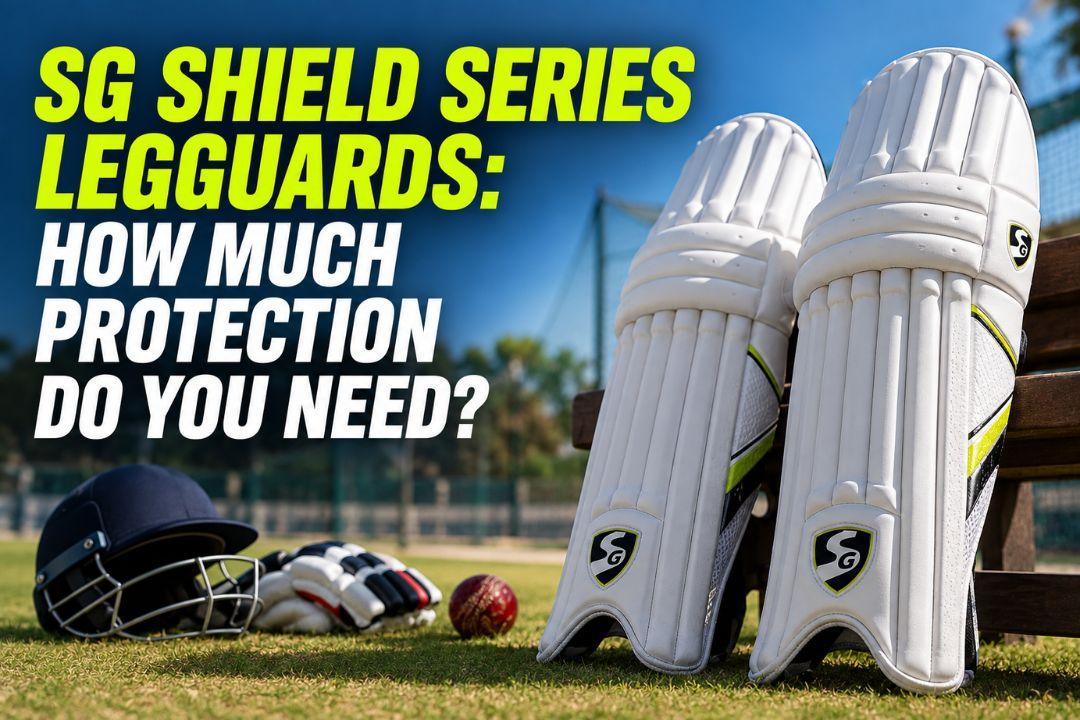
QUICK ANSWER For club and league cricketers facing genuine pace, the SG Shield Series offers the right balance — dense protection at the knee roll and shin where impact is most common, without the excess bulk of professional-grade pads that can restrict quick running between wickets. Beginners and juniors can size down in padding density; players facing fast, hostile bowling should prioritize maximum coverage over lightness. |
There are two common mistakes cricketers make with leg guards. The first: wearing thin, lightweight pads meant for casual net sessions into a match against genuine pace, leaving shins exposed to real injury risk from yorkers and full-length deliveries. The second: wearing bulky, professional-grade pads that are overkill for club-level bowling speeds, restricting running between wickets and making quick footwork against spin unnecessarily difficult. Getting this balance wrong either puts your body at risk or quietly costs you runs.
The shin and knee roll are the two most frequently struck areas in batting — from yorkers that beat your bat, to inside edges that ricochet onto the pad, to simple misjudged shots against spin. Under-protected areas here don't just risk bruising; repeated impact without adequate padding can lead to genuine bone injury over a season of regular play. At the same time, pads that are too heavy or stiff slow your stride length when running quick singles, and can even affect your ability to get into position quickly against spin bowling.
The Shield Series is built around a straightforward idea: concentrate protection where impact actually happens most — the knee roll, shin, and thigh-facing edge — while keeping the back of the pad lighter for mobility. High-density foam inserts sit behind a durable outer shell, designed to absorb and disperse impact rather than transferring the full force straight to your shin bone. The knee roll is shaped to allow a full range of motion for front-foot drives and quick transitions into your stance, addressing the common complaint that heavily padded guards restrict natural batting movement.
For club-level players facing medium-to-fast bowling regularly, this strikes a sensible middle ground: meaningfully more protective than entry-level foam pads, without the weight penalty of full professional-spec guards designed for first-class pace.
• Test your running stride in the pads before match day. Walk and jog a few quick singles in the nets — if the knee roll digs in or restricts your stride, the fit needs adjusting before you rely on it under pressure.
• Check strap tension regularly. Loose straps let pads shift mid-innings, exposing gaps exactly where a yorker is most likely to strike.
• Face throw-downs at full pace before a big match, not just soft net bowling, so your first real test of the pad's protection isn't in a match that actually counts.
• Pair leg guard protection with correct technique — good pads reduce injury risk, but getting your front leg out of the way of a well-directed yorker is still a technique issue, not just an equipment one.
Player Level / Bowling Faced | Recommended Padding Level |
Beginners, slow-medium net bowling | Lightweight, moderate density is sufficient |
Club/league players facing medium-fast pace | Shield Series-level density — protective but mobile |
Players regularly facing genuine fast bowling | Maximum density, professional-spec padding |
Junior players | Lighter, properly sized pads — never oversized adult pads "to grow into" |
Key sizing tip: A pad that's too long restricts your running and can catch on your bat during shots; too short leaves your lower shin exposed. Measure from just below the knee to just above the ankle boot line when trying pads on.
Imagine a middle-order batter walking in against a genuinely quick opening bowling attack on a green-tinged club pitch. The first over includes a full, fast yorker that beats the bat completely — the kind of delivery that, without adequate shin protection, causes real bruising or worse. Minutes later, the same batter needs to sprint two quick runs to rotate strike and keep the innings moving. This is precisely the scenario the Shield Series is built for: dense, confidence-inspiring protection exactly where that yorker lands, combined with a knee roll shaped to not restrict the sprint that follows. A batter who trusts their pads to protect them without slowing them down plays with more freedom — committing fully to front-foot drives and quick running — instead of playing tentatively out of fear of getting hit.
The right amount of leg protection isn't about buying the heaviest pads available — it's about matching padding density to the pace you actually face while preserving your mobility to run and move into shots. The SG Shield Series is built for exactly this balance, giving club and league players real protection at the impact zones without sacrificing the freedom of movement that good batting technique depends on.
1. How much padding do I actually need for club cricket?
For medium-to-fast club bowling, moderate-to-high density padding concentrated at the knee roll and shin — like the SG Shield Series — offers the right balance of protection and mobility without the bulk of professional-spec pads.
2. Do heavier cricket pads mean better protection?
Not always. Heavier pads generally offer more raw protection but can restrict running speed and footwork. The key is finding padding that protects high-impact zones (shin, knee roll) without excessive overall bulk.
3. How do I know if my batting pads fit correctly?
Pads should cover from just below the knee to just above your boot line, with straps snug enough to prevent shifting during running but not so tight they restrict knee movement.
4. Can junior players use adult batting legguards?
No — junior players should always use correctly sized junior pads. Oversized adult pads restrict running and leave gaps in protection, increasing injury risk rather than reducing it.
5. How often should batting legguards be replaced?
Replace pads when the foam padding compresses and no longer springs back, straps lose elasticity, or the outer shell shows cracking — typically every one to two seasons of regular use, depending on frequency of play.
Get the right balance of protection and mobility — shop the SG Shield Series Batting Legguards at SportsGear24x7.
The SportsGear24x7 Editorial Team is a group of passionate cricket enthusiasts and equipment specialists based in New Delhi, India. With over a decade of experience in the cricket gear industry, our team has helped thousands of players — from beginners to state-level competitors — find the right equipment for their game. Every article we publish is backed by real product knowledge, on-ground player feedback, and deep understanding of the Indian cricket ecosystem.