
How to Choose the Right Football Size for Kids, Teens & Adults
4 min read
On this page
Choosing the right football size might look like a small decision, but it plays a huge role in skill development, confidence, and injury prevention. Whether you’re buying a football for a young beginner, a teen academy player, or an adult match enthusiast, the wrong size can slow progress and take the fun out of the game.
In this complete guide, we’ll break down football sizes by age, explain why size matters, and help you confidently pick the perfect football for kids, teens, and adults.
Why Football Size Matters More Than You Think
Many players start with whatever football is available—often an adult-size ball. That’s where problems begin.
Using the correct football size helps:
- Improve ball control and touch
- Build proper kicking technique
- Reduce strain and injury risk
- Boost confidence, especially in kids
- Make training sessions more effective
A ball that’s too big or heavy can feel intimidating, while a ball that’s too small won’t prepare a player for real match conditions.
Understanding Standard Football Sizes
Football sizes are standardized worldwide, making it easy to choose—if you know the basics.
Football Size | Recommended Age Group | Typical Use |
|---|---|---|
Size 1 | 3–5 years | Skill training, fun play |
Size 3 | Under 8 years | Kids training |
Size 4 | 8–12 years | Youth & junior matches |
Size 5 | 13+ years | Adult & professional matches |
Let’s break these down in detail
Size 1 Football: For Toddlers & Skill Training (Ages 3–5)
Best for:
- Toddlers
- Very young kids
- Ball control drills
Why choose Size 1? Size 1 footballs are small, lightweight, and easy to handle. They’re perfect for introducing kids to the game without overwhelming them.
Key benefits:
- Encourages early coordination
- Easy to kick and control
- Safe for indoor and outdoor play
Pro tip: Size 1 balls are also popular with older players for footwork and control drills.
Size 3 Football: Best for Young Kids (Under 8 Years)
Best for:
- Kids aged 5–7
- School beginners
- First-time learners
This is where real football learning begins.
Why Size 3 works best:
- Lighter than adult balls
- Easier to pass, shoot, and dribble
- Builds confidence early
Kids using Size 3 footballs develop better balance and technique, instead of just kicking blindly.
Size 4 Football: Ideal for Teens & Youth Players (Ages 8–12)
Best for:
- Kids aged 8–12
- Youth leagues
- Academy training
Size 4 footballs act as a bridge between kids and adult footballs.
Key advantages:
- Prepares players for full-size football
- Improves strength and accuracy gradually
- Used in most junior competitions
If your child is training seriously or playing in school/academy matches, Size 4 is the sweet spot.
Size 5 Football: For Teens (13+) & Adults
Best for:
- Teen players (13+)
- Adults
- Competitive & professional matches
This is the official match football size used worldwide.
Why Size 5 matters:
- Matches real-game conditions
- Improves shooting power & long passing
- Essential for competitive play
Important: Don’t rush younger kids into Size 5. Using it too early can lead to poor technique and fatigue.
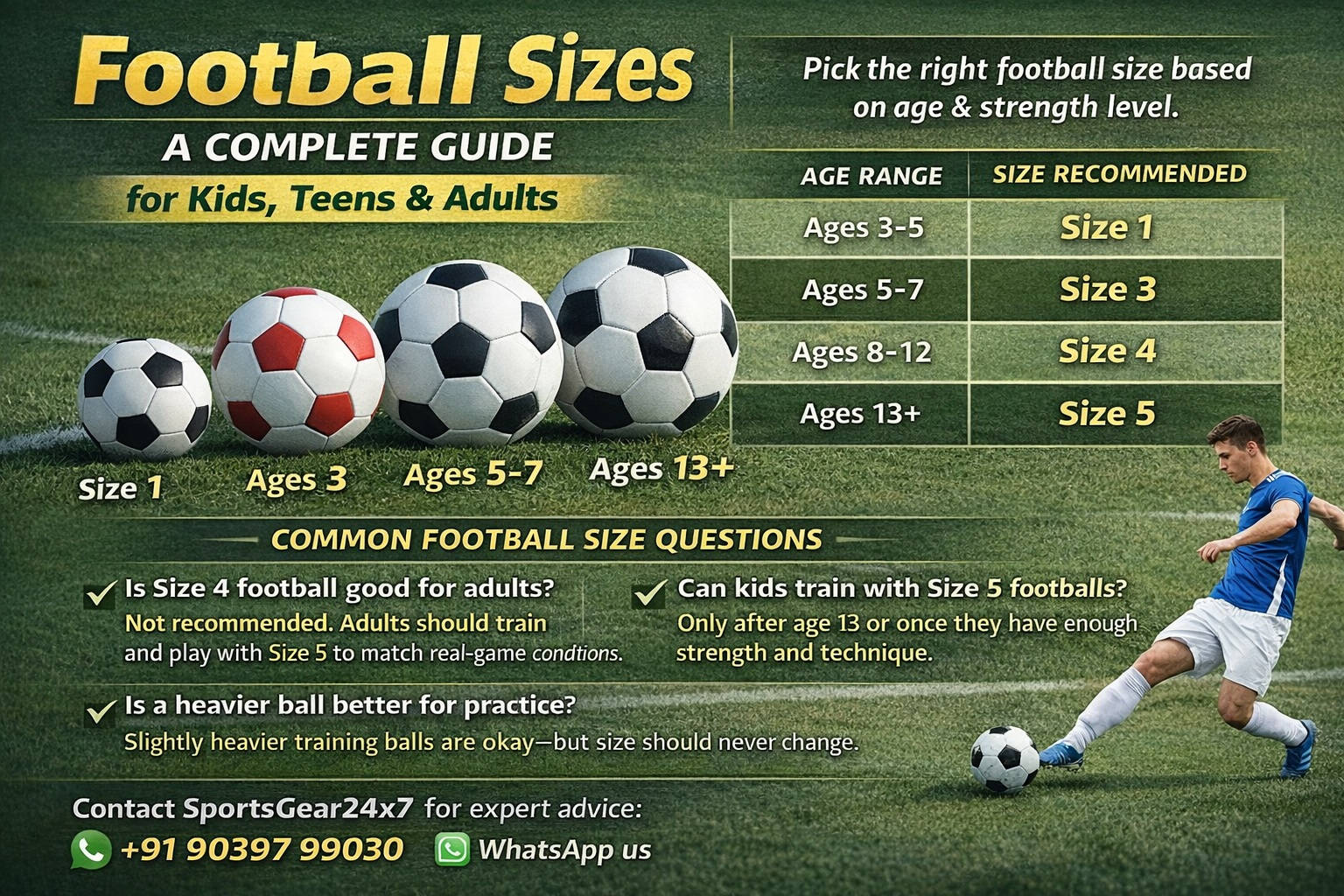
Football Size by Age: Quick Recommendation Guide
- Ages 3–5: Size 1
- Ages 5–7: Size 3
- Ages 8–12: Size 4
- Ages 13+: Size 5
When in doubt, choose based on age + strength level, not just height.
Match Football vs Training Football: Does Size Change?
Good question—and the answer is no.
- Size stays the same
- Weight & material may differ
Training footballs are often:
- Slightly heavier
- More durable
- Designed for frequent use
Match footballs:
- Lighter feel
- Better flight & touch
- Made for performance
Always choose the correct size first, then decide between training or match quality.
Common Mistakes People Make While Choosing a Football
Avoid these rookie errors
Buying Size 5 for Small Kids
“Bigger ball = faster learning” Truth: It slows progress and kills confidence.
Ignoring Player Strength
Two 12-year-olds can need different sizes depending on strength and experience.
Choosing Cheap, Incorrect Sizes
Low-quality balls often don’t match standard sizing—leading to poor bounce and control.
How to Check If the Football Size Is Right
Here’s a quick test you can do:
- The player should comfortably control the ball
- Passing should feel natural, not forced
- Kicking shouldn’t cause foot pain or fatigue
- The ball should feel manageable, not heavy
If the player struggles to lift or pass accurately, the ball is likely too big.
Final Thoughts: Choose the Right Football, Play Better Football
Choosing the correct football size is one of the simplest yet smartest decisions you can make for any player—kid, teen, or adult.
- Kids learn faster
- Teens transition smoothly
- Adults perform better
- Injuries are reduced
Whether you’re buying for fun play, school matches, academy training, or competitive games, always match the football size to the player’s age and ability.
Ready to Buy the Right Football?
At SportsGear24x7, you’ll find original, high-quality footballs for kids, teens, and adults—perfect for training and matches.
Call us: +91 90397 99030 WhatsApp us for expert guidance
Play smart. Choose the right size. Enjoy the game.
Frequently asked questions
Is Size 4 football good for adults?
Not recommended. Adults should train and play with Size 5 to match real-game conditions.
Can kids train with Size 5 footballs?
Only after age 13 or once they have enough strength and technique.
Is a heavier ball better for practice?
Slightly heavier training balls are okay—but size should never change.