Cricket Training Equipment Guide: Bowling Machines, Practice Balls & Drills to Sharpen Your Game
Updated 5 min read


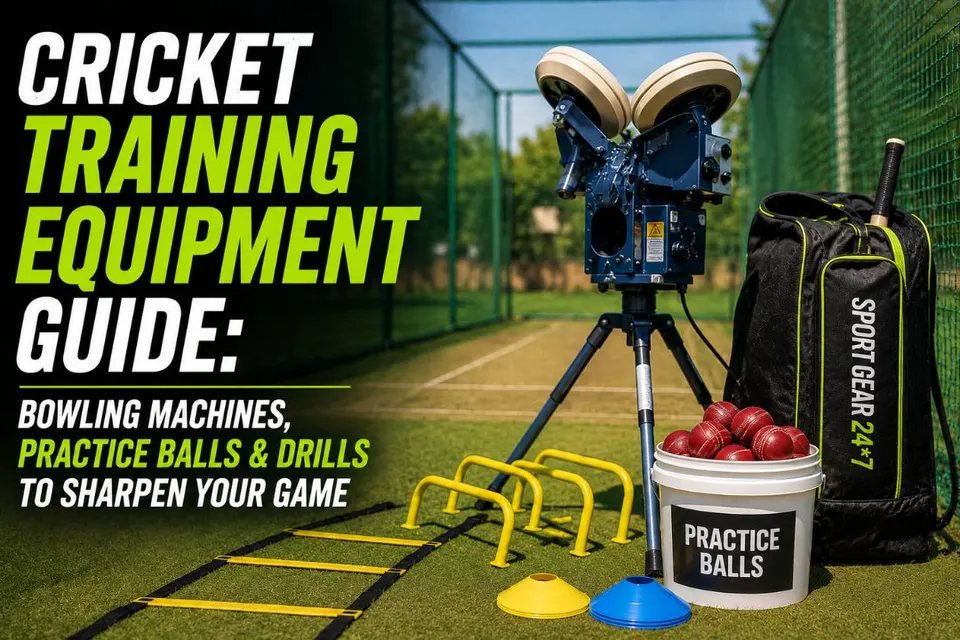
There’s a wide gap between players who improve steadily season after season and players who plateau — and it usually isn’t talent. It’s what happens between matches. Structured, purposeful practice with the right equipment closes technical gaps that match play alone never will, because matches don’t give you the repetition needed to fix a flaw.
This guide covers the training equipment that makes practice sessions actually productive, whether you’re working in a net, a backyard, or a shared community ground.
Simply “having a hit” or bowling a few overs without a specific focus builds match fitness, but it rarely fixes technical issues. A batter who struggles against the short ball needs repeated, controlled exposure to that specific delivery — not just more general batting practice. A bowler working on line and length needs targets and feedback, not just overs bowled.
1. Practice balls suited to the session. Tennis-ball-weight cricket balls are excellent for high-repetition technical work — they allow more deliveries per session with less physical strain than a full leather ball, making them ideal for drilling specific technical corrections.
2. A dedicated practice bat. Many serious players keep a slightly older or lower-grade bat specifically for net sessions, preserving their match bat’s condition while still training with proper bat weight and balance.
3. A well-organised kit bag for transport. Training sessions often mean carrying more gear — balls, stumps, cones, spare gloves — to and from the ground, and a bag with dedicated compartments keeps kit protected and quick to access.
4. Target markers and cones, for bowlers working on consistent line and length, and for fielders drilling footwork patterns.
• Warm up with throwdowns or soft-ball work before moving to full-intensity net sessions — this reduces injury risk and improves the quality of technical work once you do increase intensity.
• Isolate one technical focus per session. Trying to fix your footwork, your grip, and your shot selection simultaneously usually improves none of them.
• Use lighter practice balls for high-repetition drills. More quality repetitions at a manageable intensity beats fewer repetitions at full match intensity when you’re grooving a specific movement pattern.
• Film your technique periodically. A phone propped on a tripod during net sessions reveals footwork and shape issues that are difficult to feel in the moment.
Batters: Repetition against varied deliveries — particularly whatever length and pace you find hardest to face in matches — is more valuable than simply facing more overs at a comfortable pace.
Bowlers: Target-based practice (bowling at a specific marker or stump zone repeatedly) builds the consistency that match situations demand, far more than unstructured bowling.
Fielders: Short, sharp reaction drills — catching practice, ground fielding with quick direction changes — build the instinctive responses that match-day pressure tends to strip away if they aren’t already automatic.
For high-repetition technical practice, tennis-ball-weight cricket balls let you drill more deliveries per session with less physical wear than a full leather ball:
• Nivia Cricket Tennis Ball – Heavyweight (Red) gives a closer feel to a leather ball for realistic practice.
• Nivia Cricket Tennis Ball – Lightweight (Yellow) is ideal for extended technical sessions and junior players.
• Cosco Cricket Tuff Tennis Ball is a durable, pressureless option built for repeated high-volume net sessions.
For a dedicated practice bat, the SG Cricket Bat Triple Crown Classic offers reliable bat weight and balance suited to regular net use.
To transport your full training kit, browse our Kit Bags collection or explore the wider Cricket Balls collection and Cricket Bats collection.
• Use a tennis-ball-weight cricket ball indoors or in confined spaces — full leather balls are unsafe and often prohibited in home or shared community settings.
• Set a specific, measurable goal for each session (“hit a target zone eight times out of ten” beats “bowl for twenty minutes”).
• Rotate focus areas across the week rather than drilling the same skill every single session — variety builds more complete technique.
• Involve a second person for feedback whenever possible. Even a non-playing parent or friend can spot obvious technical issues a solo player can’t see in real time.
Training Goal | Recommended Equipment |
High-repetition technical batting drills | Lightweight/pressureless practice balls |
Realistic match-speed practice | Heavyweight tennis-ball-weight balls |
Preserving your match bat | A dedicated, slightly older practice bat |
Transporting full training kit | A wheelie or duffle kit bag with organised compartments |
The players who improve consistently season after season are almost always the ones who train with intent — using the right equipment for the specific skill they’re working on, not just showing up and hitting balls. Investing in a few purpose-built training tools, from the right practice balls to a dedicated practice bat, turns unstructured practice into genuine improvement.
Q: Are tennis-ball-weight cricket balls good enough for serious practice?
Yes, particularly for high-repetition technical work. They allow more deliveries per session with reduced physical strain, though players should still face full leather balls regularly to maintain match readiness.
Q: Should I use my match bat for net practice?
Many serious players keep a separate practice bat to preserve their match bat’s condition, especially the edges and toe, which take the most wear during high-volume net sessions.
Q: How often should junior players train with a bowling machine or throwdowns versus live bowling?
A mix is ideal — throwdowns and machines allow controlled, repeatable technical work, while live bowling develops the reading and reaction skills needed in real match situations.
Q: What’s the biggest mistake players make in practice?
Practising without a specific focus. Simply facing overs or bowling deliveries without a clear technical goal builds general fitness but rarely fixes the specific issues that cost runs or wickets in matches.
The SportsGear24x7 Editorial Team is a group of passionate cricket enthusiasts and equipment specialists based in New Delhi, India. With over a decade of experience in the cricket gear industry, our team has helped thousands of players — from beginners to state-level competitors — find the right equipment for their game. Every article we publish is backed by real product knowledge, on-ground player feedback, and deep understanding of the Indian cricket ecosystem.