Cricket Neck Guard & Neck Protector Guide: Do You Need One and Which Type Is Right?
Updated 5 min read


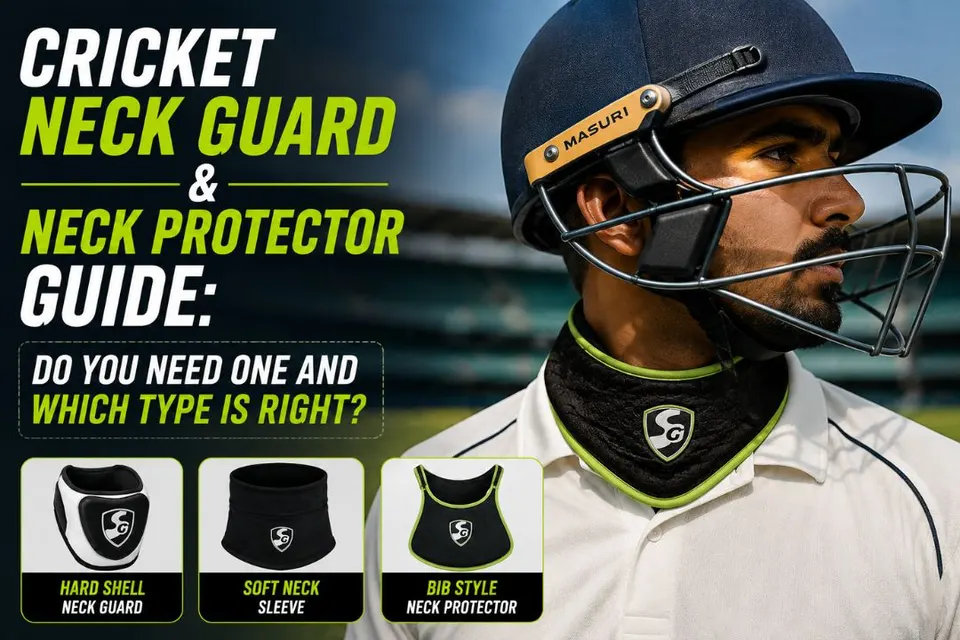
Cricket helmet safety changed permanently after high-profile injuries exposed a gap in protection that even the best helmets couldn’t close: the neck and the area just below the helmet’s peak. In response, manufacturers developed Stem Guard technology (SRS — Stem Restraint System) and standalone neck protectors specifically to shield this vulnerable zone. If your helmet doesn’t have this protection built in, or you’re using an older model, this guide explains exactly what you need and why.
A cricket helmet is engineered to protect the skull and face through its shell and grill. But the neck — specifically the area at the base of the skull where the helmet’s peak meets the neck — sits outside that protective zone. A rising short ball that gets under the grill or strikes just below the helmet’s rear can make direct contact with this area, and at fast-bowling speeds, that impact carries serious risk.
This is exactly why cricket’s governing bodies now strongly recommend, and many boards mandate, neck protection as standard kit for batters and close-in fielders facing a hard ball.
SRS is a rear-attachment system fitted to the base of a cricket helmet that restrains the movement of the helmet’s stem, closing the gap between the helmet shell and the neck. It works alongside — not instead of — a separate padded neck guard, which provides direct cushioning over the vertebrae.
• Neck Guard: A rigid or semi-rigid shield, usually clipped to the back of the helmet, designed to deflect a direct strike away from the neck.
• Neck Protector: A padded, foam-based accessory that sits against the neck and cushions impact that does make contact, often used in combination with SRS-fitted helmets.
Most serious batters now use both — an SRS-compatible helmet paired with a fitted neck protector — for layered protection rather than relying on either alone.
• Batters facing genuine pace, especially at club level and above, where short-pitched bowling is a regular tactic.
• Wicketkeepers standing up to medium pace or back, who face deflections and top-edges at close range.
• Junior players moving from tennis-ball to leather-ball cricket, where the jump in ball speed is often underestimated by parents and coaches alike.
• Any player using a helmet manufactured before SRS became standard — retrofitting a neck guard is a low-cost way to bring an older helmet up to current safety thinking.
1. Check helmet compatibility first. Neck guards are typically model-specific or use a universal clip system — always confirm fit against your existing helmet before buying.
2. Junior vs adult sizing. A neck guard sized for an adult will sit incorrectly on a junior player and may actually reduce visibility or mobility rather than improve safety.
3. Padding quality. Look for guards with genuine multi-layer foam construction rather than a single thin pad — the point of the guard is to absorb, not just deflect.
4. Ease of attachment. A guard that’s fiddly to fit gets left in the kit bag on a hot day. Choose a clip or strap system players will actually use every innings.
Forma is one of the most established names in cricket head and neck protection technology. Explore:
• Forma Neck Guard Pro Axis — designed for adult players facing serious pace.
• Forma Neck Guard Little Master — a junior-specific fit for younger players making the leap to hard-ball cricket.
• Forma Neck Protector with SRS — combines the padded protector with SRS-compatible attachment for layered protection.
Browse the complete range in our Neck Guards collection and pair with a certified helmet from our Cricket Helmets collection.
• Fit the neck guard before you walk out to bat, not once you’re already facing the bowler — a rushed fit is an unsafe fit.
• Check the attachment after every session. Clips and straps can loosen with repeated use and need periodic tightening.
• Don’t skip it against spin. While the risk is highest against pace, a mistimed sweep or a ball that skids on can still catch a batter off guard.
• Replace after any direct impact. Like a helmet shell, a neck guard that has absorbed a genuine blow should not be trusted for a second impact.
Player Type | Recommended Setup |
Junior / school player | Junior-sized neck guard + age-appropriate helmet |
Club batter facing pace | SRS-compatible helmet + padded neck protector |
Wicketkeeper (standing back) | Neck protector fitted to keeping helmet |
Occasional / social player | At minimum, a clip-on neck guard for peace of mind |
Neck protection isn’t an accessory it’s the missing layer in a helmet system that otherwise leaves a genuinely vulnerable area exposed. Whether you’re outfitting a junior player stepping up to leather ball for the first time, or a club batter who’s never quite trusted their older helmet against fast bowling, a properly fitted neck guard closes a real safety gap for a modest cost.
Q: Is a neck guard compulsory in cricket?
Requirements vary by board and league, but neck protection is increasingly recommended or mandated at junior and representative levels. Check your specific league’s regulations.
Q: Can I fit a neck guard to any helmet?
Not always — many neck guards are designed for specific helmet models or attachment systems. Always confirm compatibility before purchasing.
Q: What’s the difference between SRS and a standalone neck guard?
SRS restrains the helmet’s stem movement at the point of attachment; a standalone neck guard provides direct cushioning over the neck itself. They’re complementary, not interchangeable.
Q: Do wicketkeepers need neck guards too?
Yes, particularly keepers standing up to the stumps, who face deflections and top-edges at very close range with limited reaction time.
The SportsGear24x7 Editorial Team is a group of passionate cricket enthusiasts and equipment specialists based in New Delhi, India. With over a decade of experience in the cricket gear industry, our team has helped thousands of players — from beginners to state-level competitors — find the right equipment for their game. Every article we publish is backed by real product knowledge, on-ground player feedback, and deep understanding of the Indian cricket ecosystem.