
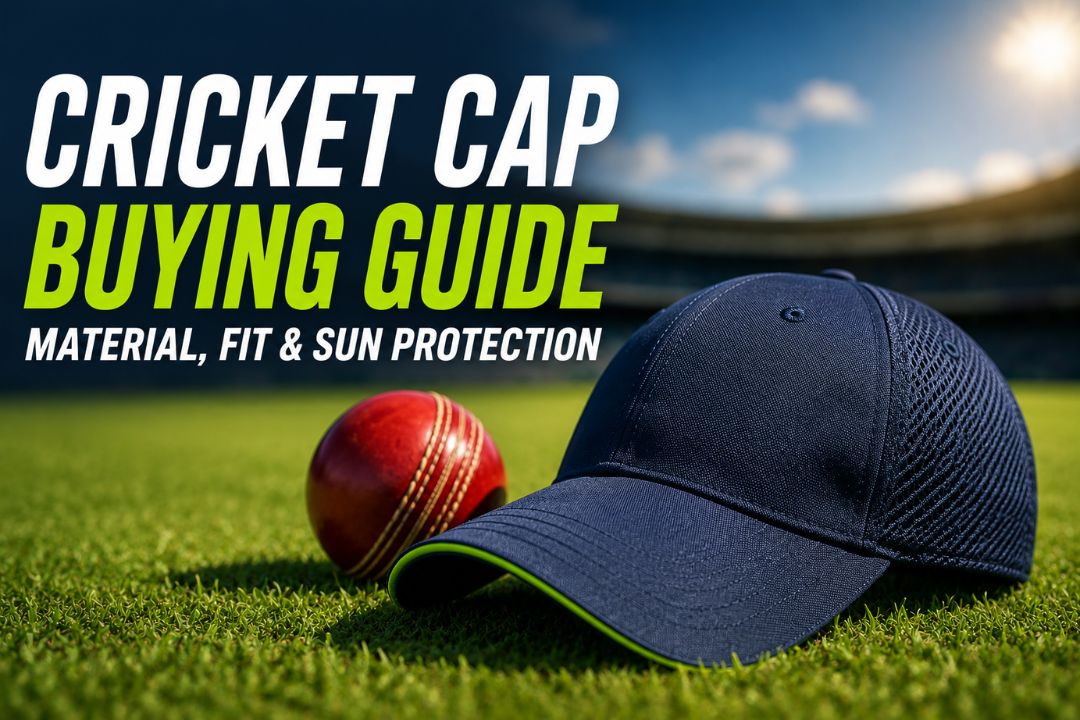
Cricket Cap Buying Guide: Material, Fit & Sun Protection
On this page
Introduction
A cricket cap is one of the simplest, most affordable pieces of equipment in the game — and also one of the most consistently underestimated. Fielders, bowlers, and even batters between overs wear caps for hours under direct sun, yet most players choose a cap based on color or team branding alone, without considering fabric breathability, peak length, or fit stability during quick head movements while fielding.
This guide covers what actually matters when choosing a cricket cap — beyond just picking your favorite color — so it genuinely supports you through a full day in the field.
The Common Problem: Choosing Style Over Function
Cricket caps are often purchased as part of a team kit or merchandise purchase, with little thought given to whether the specific cap suits the wearer's playing role or local climate. A cap that's too tight causes discomfort and headaches over a long session. A cap with a peak that's too short doesn't provide adequate glare reduction for fielders tracking high catches, while a peak that's too long can restrict upward vision at the wrong moment.
Why the Right Cricket Cap Matters
Sun protection over extended exposure. A full day's cricket — particularly for fielders who spend far more time standing under the sun than batters or bowlers between spells — means genuine, cumulative UV exposure. A well-fitted cap with adequate coverage reduces this exposure meaningfully over a playing career.
Glare reduction for catching. The cap's peak plays a functional role beyond sun protection — it helps reduce glare when tracking a ball against bright sky, particularly relevant for fielders in the deep judging high catches.
Comfort and fit stability during play. A cap that shifts or needs constant readjustment during fielding is a genuine distraction, particularly during sudden sprints or dives where a loose cap can fall off at exactly the wrong moment.
Material Considerations
Cotton twill. The traditional cricket cap material — breathable, comfortable, and durable, though it absorbs sweat more than modern synthetic blends and can feel heavier when wet during long, hot sessions.
Polyester or poly-cotton blends. Increasingly common in modern cricket caps, offering better sweat-wicking and faster drying than pure cotton, while maintaining reasonable breathability — a practical choice for players in consistently hot, humid conditions.
Mesh-back panels. Many modern caps incorporate a mesh rear panel for improved ventilation, particularly useful for extended wear during hot-weather matches where heat build-up under a solid-back cap becomes genuinely uncomfortable over several hours.
Peak Length and Shape
Standard peak length (around 7–8 cm) suits most players and playing conditions, offering a reasonable balance of sun/glare protection without restricting upward vision.
Longer peaks provide more sun and glare protection, useful for fielders in high-sun positions or players particularly sensitive to bright light, but can slightly restrict vision on steep, high catches if not angled correctly.
Flatter vs curved peak shape is largely personal preference, though a slightly curved peak tends to sit more naturally and consistently through repeated head movement during fielding compared to a completely flat brim.
Fit and Sizing
Adjustable strap-back closures (velcro or buckle) offer the most flexibility and are generally the practical choice for club-level and recreational players, since they accommodate slight variations in fit comfortably.
Fitted, non-adjustable caps sized specifically (small/medium/large or precise circumference) offer a more secure, consistent fit for players who know their exact size and want zero movement during active fielding — often preferred at representative or more serious competitive levels.
Junior sizing matters distinctly — a cap sized for an adult, even on the smallest adjustable setting, often doesn't provide a secure fit for younger players, and a properly junior-sized cap makes a genuine difference in comfort and sun protection for kids.
Gear Recommendations by Role
Outfield fielders: A well-ventilated cap with a standard-to-longer peak for maximum sun and glare protection during extended time in direct sunlight tracking high balls.
Bowlers: A lightweight, breathable cap that doesn't add noticeable weight or heat during a full bowling spell — mesh-back designs work particularly well here given the physical exertion involved.
Wicketkeepers: A closely fitted cap (if worn at all — many keepers prefer a cap-free or minimal-peak option) that won't interfere with quick head movement or peripheral vision during rapid lateral tracking.
Junior players: Properly junior-sized caps with adjustable straps to accommodate growth, prioritizing genuine sun protection given children's higher relative sun sensitivity — see our junior cricket kit guide for sizing across the rest of a young player's kit.
Practical Buying Tips
● Prioritize breathable, moisture-wicking fabric if you play regularly in hot, humid conditions — the comfort difference over a full day's fielding is significant compared to basic cotton.
● Check strap adjustability range before buying, particularly for younger players whose head size may still be changing — a cap with a wide adjustment range offers better long-term value.
● Don't oversize "for growth" with junior caps — an overly loose cap won't stay in place during active play and undermines the sun protection it's meant to provide.
● Wash regularly, but check care instructions — caps with structured peaks can lose shape if machine-washed improperly; many benefit from gentle hand-washing to preserve peak stiffness.
Buying Guide: Cap Type by Playing Situation
Situation
Recommended Cap Type
Outfield fielding, hot conditions
Mesh-back, standard-to-long peak
Bowling spells
Lightweight, breathable, mesh-back
Wicketkeeping
Minimal or no cap, close-fit if worn
Junior players
Adjustable strap, junior-sized
High UV exposure regions
Longer peak, poly-cotton blend
Conclusion
A cricket cap is a small, inexpensive purchase, but its practical role — sun protection, glare reduction, and comfort over hours in the field — makes it worth genuine consideration rather than a purely style-based purchase. Choose breathable fabric suited to your local climate, a peak length appropriate to your fielding role, and a fit that stays secure through sprints and dives. It's a minor investment that makes a real difference across a full season of play.
Explore cricket caps at SportsGear24x7 — breathable, adjustable options for adult and junior players across every budget.
Frequently asked questions
What material is best for a cricket cap in hot climates?
Poly-cotton blends with mesh-back panels offer the best combination of breathability and sweat management for hot, humid playing conditions common across most of the Indian cricket season.
Does the peak length on a cricket cap actually matter?
Yes — a longer peak provides more sun and glare protection, particularly useful for outfield fielders tracking high catches, while a standard length suits most general playing situations without restricting upward vision.
Should juniors wear the same caps as adults, just sized down?
No — juniors should wear properly junior-sized caps rather than adult caps on their smallest adjustment setting, since a genuinely well-fitted cap stays secure during play and provides better actual sun protection.
Do wicketkeepers need to wear a cricket cap?
Many wicketkeepers prefer not to wear a cap, or wear a minimal, close-fitting option, since a standard peak can interfere with the quick head movement and peripheral vision needed for rapid lateral tracking behind the stumps.
How do I keep a cricket cap's peak from losing its shape?
Hand-wash rather than machine-wash where possible, and avoid folding or compressing the peak during storage — most structured peaks lose their shape faster from improper washing and storage than from normal wear during play.