
Cricket Bat Grip Types Explained: Which One Should You Choose?
On this page
Introduction
The bat grip is the single point of physical contact between a batter and their most important piece of equipment — yet it's often the last accessory players think about when assembling or maintaining their kit. Most cricketers replace their grip only when it visibly falls apart, without ever considering whether a different grip type might actually suit their game better.
The truth is that grip choice affects far more than comfort. It influences your feel for the bat, your control over shot placement, and even how much vibration transfers into your hands on mishits. This guide breaks down the main grip types available and helps you choose based on your playing style, conditions, and hand comfort.
The Common Problem: Treating All Grips as Identical
Walk into most sports stores and grips are often sold simply by color, with little explanation of the underlying differences in profile, material, and tackiness. Players default to whatever their bat came with, or whatever's cheapest, without realizing that grip profile changes how the bat handle feels in the hand — thinner profiles allow more wrist freedom for certain shots, while thicker profiles add cushioning and reduce vibration on mishits.
Using the wrong grip type for your hand size and playing style can genuinely affect shot execution, particularly on quick wristy shots like the cut or the pull.
Why Grip Choice Actually Matters
A cricket bat's grip does three jobs simultaneously: it provides tackiness so the bat doesn't slip during a shot (especially with sweaty hands in Indian conditions), it cushions vibration from the impact of ball on bat, and it shapes how the handle feels in your hands, which affects wrist positioning through the swing.
A worn-out or poorly chosen grip loses tackiness over time, which is a genuine performance and safety issue — a bat slipping mid-shot, even slightly, affects both shot execution and control.
Common Cricket Bat Grip Types
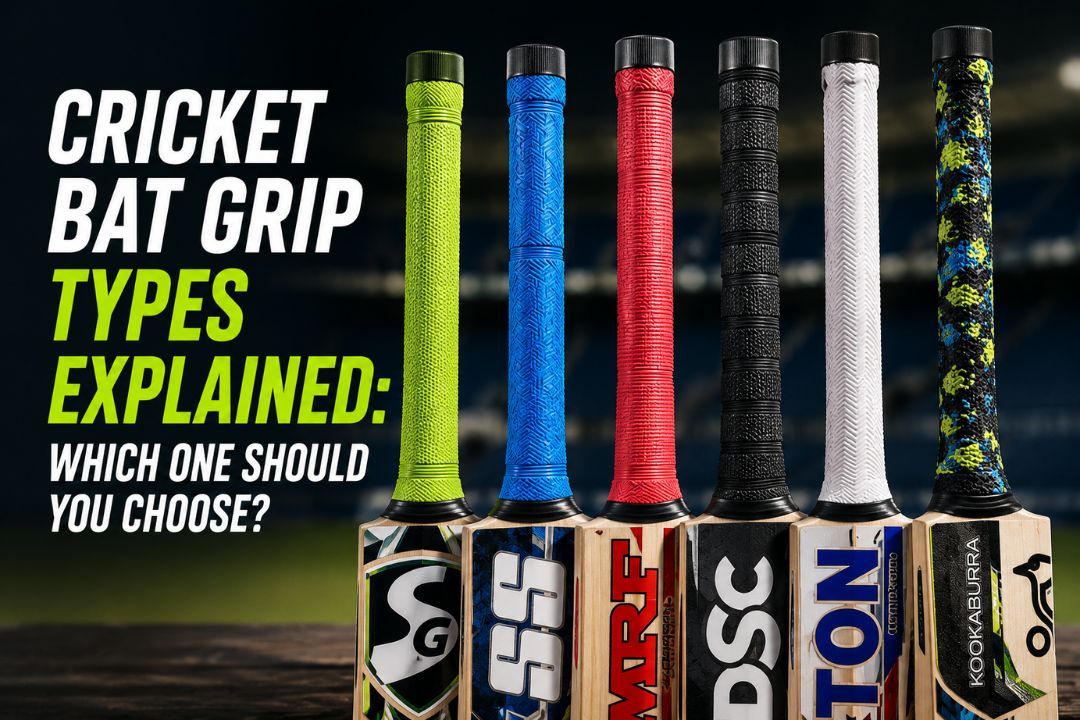
Chevron grip. The most widely used grip pattern, featuring a diagonal ribbed pattern that provides reliable tackiness across a wide range of conditions. A solid, all-purpose choice for most players at any level.
Cone grip. Named for its raised conical bumps, this grip offers a more pronounced tactile feel in the hand — some players find this helps with bat control, particularly in wetter conditions where standard grips can become slick.
Octopus grip. Featuring a distinctive raised, rounded pattern, this style is popular among players who prioritize maximum tackiness and a slightly thicker feel in the hand — useful for players prone to grip slippage during long innings in hot, humid conditions.
Smooth/flat grip. A minimal-texture grip favored by some players who prefer a thinner handle feel and maximum wrist freedom, particularly for quick, wristy shots. Requires more frequent replacement since the reduced texture wears down tackiness faster.
Herringbone grip. A tighter, more compact ribbed pattern than the standard chevron — offers slightly more surface contact and a firmer tactile feel, popular with players who prefer a very secure, locked-in grip sensation.
Grip Thickness and Profile
Beyond pattern, grip thickness (measured in the number of grip layers or the grip's outer diameter) significantly affects handle feel:
Thin profile (single grip layer): Offers maximum wrist freedom and the most direct feel of the bat handle — favored by players with a wristy, hand-dominant technique who want minimal interference between hand and bat.
Standard profile (single quality grip, moderate thickness): The most common choice, balancing tackiness, cushioning, and control for the majority of playing styles.
Thick profile (double-wrapped or extra-cushioned grip): Adds noticeably more shock absorption on mishits, useful for players who've experienced discomfort or vibration-related hand fatigue, though some feel it reduces the direct connection to the bat needed for precise shots.
How Grip Choice Relates to Conditions and Playing Style
Humid or sweaty conditions (most of the Indian cricket season): Prioritize a grip with pronounced texture — octopus or cone styles — since tackiness under sweat matters more here than a minimal, thin-profile feel.
Players focused on wristy shots (cuts, pulls, flicks): A thinner profile grip, often chevron or smooth, allows more natural wrist rotation through the shot — the same players who benefit from thinking carefully about bat weight when facing spin, since grip feel and bat weight work together on quick-hands shots.
Players who've experienced hand discomfort or vibration issues: A thicker, double-wrapped grip cushions impact more effectively, worth considering even at some cost to raw feel.
New or lower-quality bats needing extra cushioning: A quality grip can meaningfully improve the feel of a budget bat, making grip choice a cost-effective upgrade path before investing in a more expensive blade.
Practical Buying and Maintenance Tips
● Replace your grip every 3–4 months during active play, or sooner if you notice reduced tackiness — a worn grip is one of the easiest and cheapest equipment upgrades available, but is frequently ignored until it becomes a genuine problem.
● Match grip color/style to conditions if you play across formats — some serious players keep a slightly thicker grip for longer format matches (more time in the middle, more fatigue) and a thinner profile for shorter, faster-paced formats.
● Apply grip correctly, without excessive gaps or overlap — a poorly applied grip, even a good-quality one, won't perform properly if wound too loosely or unevenly.
● Store bats with grips intact away from direct sunlight — prolonged heat exposure can dry out and crack grip material faster than normal wear would.
Buying Guide: Grip Type by Playing Style
Playing Style / Condition
Recommended Grip Type
All-purpose, most players
Chevron
Humid/sweaty conditions
Octopus or cone
Wristy shot-makers (cuts, pulls)
Thin profile, chevron or smooth
Players wanting max tackiness
Octopus
Vibration/discomfort concerns
Thick, double-wrapped
Budget bat needing feel upgrade
Standard chevron, quality brand
Conclusion
Your bat grip is a small, inexpensive piece of equipment that has an outsized effect on shot execution, comfort, and control — and it's one of the easiest upgrades to make correctly once you understand the actual differences between grip types. Match your grip choice to your playing conditions and shot-making style rather than defaulting to whatever came with the bat, and replace it proactively rather than waiting for visible wear. It's a small investment that pays off every time you're at the crease.
Explore cricket bat grips and accessories from SG, SS, and MRF at SportsGear24x7, alongside the full cricket bats range — multiple grip styles and colors available for every playing condition.
Frequently asked questions
How often should I replace my cricket bat grip?
Replace your grip every 3–4 months during active, regular play, or sooner if you notice it losing tackiness or starting to slip in your hands, especially in hot or humid conditions.
What's the best cricket bat grip for humid conditions?
Octopus or cone-style grips generally offer the most reliable tackiness under sweaty, humid conditions, since their more pronounced texture maintains grip even as your hands perspire.
Does grip thickness affect batting performance?
Yes. Thinner grips offer more direct feel and wrist freedom, useful for wristy shots, while thicker grips cushion vibration and shock better on mishits, which some players find more comfortable over long innings.
Can a good grip improve a budget cricket bat?
Absolutely. Upgrading to a quality grip is one of the most cost-effective ways to improve the feel and comfort of an entry-level bat, without the expense of buying a new blade.
Is chevron or octopus grip better for beginners?
Chevron is generally the better starting point for beginners — it's the most widely used, all-purpose grip style and performs reliably across most conditions, letting new players focus on technique rather than adapting to a specialized grip feel.