Compression Wear in Cricket: Do Arm Sleeves & Compression Gear Actually Improve Performance?
Updated 5 min read


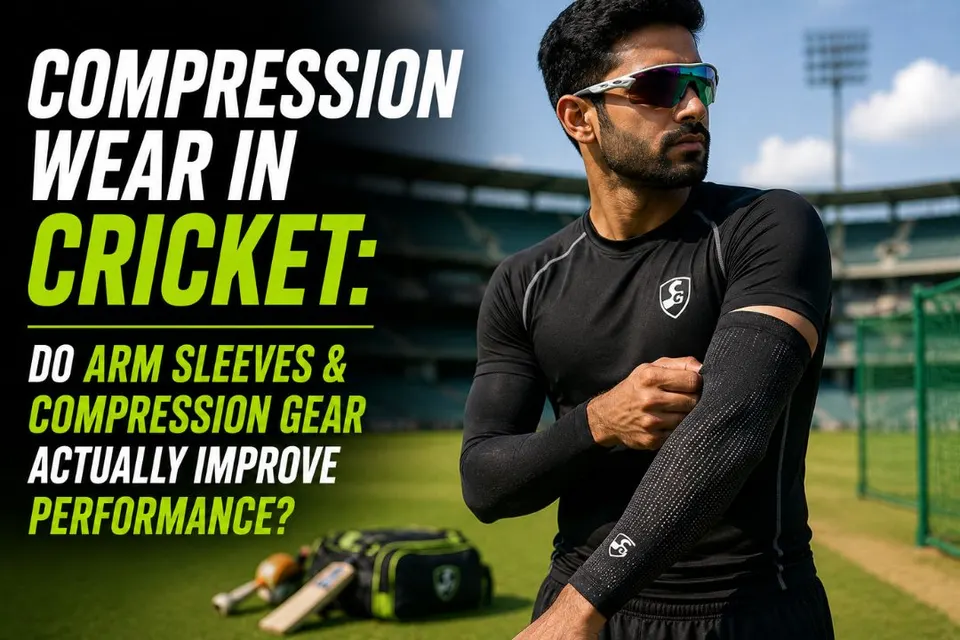
Walk onto any club or school ground today and you’ll see compression arm sleeves, compression inners under batting gloves, and fitted base layers on players at every level. Some of it is genuine performance gear; some of it is simply following what professionals wear. This guide separates the real, evidence-backed benefits of compression wear in cricket from the hype, and helps you decide whether it belongs in your kit bag.
Cricket places specific, repetitive strain on certain muscle groups: the bowling arm and shoulder for bowlers, the forearms and wrists for batters gripping the bat through long innings, and the legs for fielders doing repeated sprints and direction changes across a full day. Left unmanaged, this repetitive strain contributes to fatigue, minor muscle soreness, and — over a season — a higher risk of overuse injuries like tennis elbow or shoulder strain.
Compression wear is designed to address this through graduated pressure that supports muscle and improves blood flow to the working area.
1. Muscle support during movement. Graduated compression reduces excess muscle oscillation (the “jiggle” effect) during running, bowling, and diving, which can lower muscle fatigue over a long session.
2. Improved blood flow. Compression garments are designed to support venous return, which some players find reduces the sensation of heaviness in the legs or arms during long days in the field.
3. Joint and tendon support. Arm sleeves in particular provide light compression around the elbow and forearm — useful for bowlers managing existing strain or batters who spend hours gripping the bat.
4. Sun and abrasion protection. This is a genuinely practical, often overlooked benefit — arm sleeves protect skin from sunburn during long days in the field and from turf abrasion during dives.
5. Sweat management. Moisture-wicking compression fabric keeps grip surfaces (like the palm under a batting glove) drier for longer.
It’s worth being realistic: compression gear is not a substitute for proper warm-up, conditioning, or technique work, and it won’t prevent an acute injury from a bad landing or a sudden awkward movement. The performance benefits are real but modest — supportive, not transformative.
• Fast bowlers, who place the most repetitive strain on the shoulder and arm across a spell.
• Batters facing long innings, where forearm and wrist fatigue affects grip and shot control late in an innings.
• Fielders in hot conditions, where sun protection and sweat management matter as much as muscle support.
• Players returning from minor strain or soreness, where light compression support (alongside proper physio guidance) can aid comfort during return to play.
1. Graduated compression, not just tight fabric. Genuine compression garments apply varying pressure across the limb — tighter at the extremity, lighter closer to the body — rather than uniform tightness.
2. Breathable, moisture-wicking material. Cricket is played in heat for hours at a time; a compression sleeve that traps heat defeats its own purpose.
3. Correct sizing. Too loose and you lose the compression benefit entirely; too tight and you risk restricting circulation rather than supporting it. Always check the brand’s specific size chart.
4. UV protection rating, if sun protection is a priority alongside muscle support.
The DSC Compression Arm Sleeve offers graduated compression with moisture-wicking fabric, suited to both bowlers and fielders spending long hours in the sun.
For batters looking to combine compression benefits with glove comfort, pair with inner wear like the DSC Batting Inner – Atmos or the SS Batting Inner – Player Series, both designed to sit comfortably beneath batting gloves for sweat management and added comfort through a long innings.
Browse the wider range in our Cricket Accessories collection and Cricket Gloves collection.
• Wash compression gear after every use. Compression fabric loses elasticity faster than regular cricket clothing if sweat and dirt are left to set in.
• Don’t oversize “for comfort.” Compression only works at the correct fit — sizing up defeats the purpose.
• Combine with, not instead of, proper warm-up. Compression supports muscles already working correctly; it doesn’t replace the need to warm up before bowling or fielding.
• Replace when elasticity fades. Once a compression sleeve stops springing back to shape, it’s no longer providing genuine graduated compression.
Player Type | Recommended Compression Gear |
Fast bowler | Arm sleeve + shoulder-supportive base layer |
Batter (long innings) | Compression batting inners under gloves |
Fielder (hot conditions) | UV-rated compression arm sleeve |
Returning from minor strain | Light compression, physio-guided use |
Compression wear in cricket isn’t a gimmick, but it’s also not magic — it’s a modest, genuinely useful support tool for muscle fatigue, blood flow, sun protection, and comfort across long days in the field or at the crease. If you’re a bowler managing arm workload, a batter looking to maintain grip and comfort deep into an innings, or simply someone who plays long hours under strong sun, compression gear is a sensible, low-cost addition to your kit.
Q: Does compression wear actually reduce muscle soreness?
Evidence suggests modest benefits for reducing the perception of muscle fatigue and supporting recovery, though it’s not a substitute for proper conditioning and rest.
Q: Should batters wear compression sleeves under their pads?
It’s optional and comes down to personal comfort — some batters prefer the added support around the forearm, particularly during long innings in the heat.
Q: Is compression gear only for fast bowlers?
No. Fielders and batters both benefit from the sun protection, sweat management, and light muscular support compression gear provides, not just bowlers managing arm workload.
Q: How tight should a compression arm sleeve be?
Snug enough to apply genuine graduated pressure without cutting off circulation — if fingers tingle or discolour, it’s too tight and should be resized.
The SportsGear24x7 Editorial Team is a group of passionate cricket enthusiasts and equipment specialists based in New Delhi, India. With over a decade of experience in the cricket gear industry, our team has helped thousands of players — from beginners to state-level competitors — find the right equipment for their game. Every article we publish is backed by real product knowledge, on-ground player feedback, and deep understanding of the Indian cricket ecosystem.