Boxing Training Gear Checklist: Hand Wraps, Headgear & Mouthguards Explained
4 min read


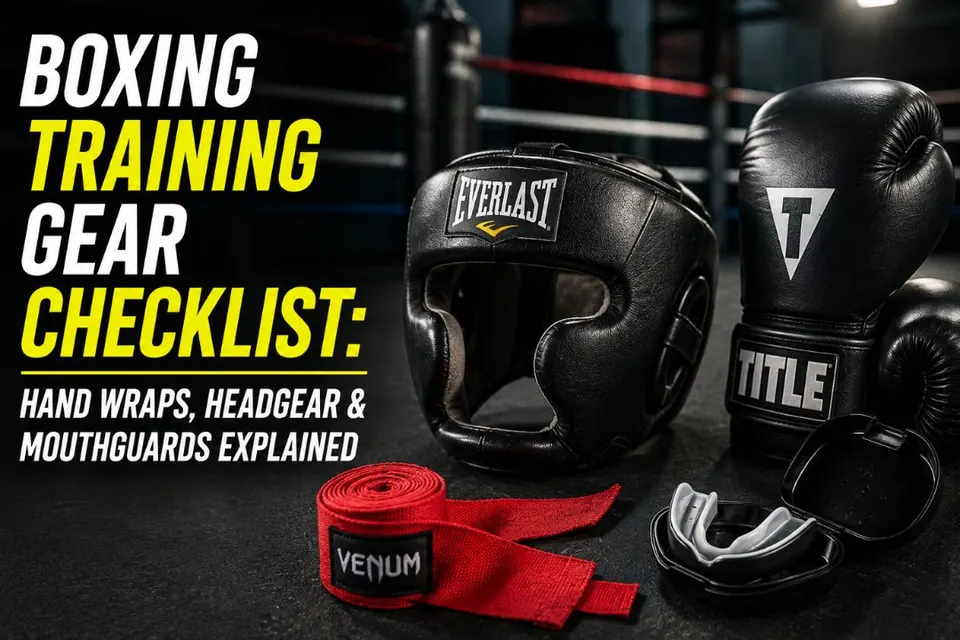
Boxing gloves get all the attention, but they’re only one piece of a complete safety setup. Hand wraps, headgear, and mouthguards each protect a different part of the body from a different type of impact — and skipping any one of them significantly raises injury risk, whether you’re hitting a heavy bag solo or sparring with a partner. This checklist explains what each item actually does and how to choose correctly.
A common misconception among newer boxers is that padded gloves are sufficient hand protection on their own. They’re not. Gloves cushion the impact of a punch landing, but they don’t stabilise the many small bones and joints inside the hand and wrist during that impact. Repeated punching without proper wrist and knuckle support is one of the most common causes of boxing-related hand injuries — even among recreational trainees who never plan to spar or compete.
Hand wraps go on underneath gloves and serve a purpose gloves alone cannot:
• Wrist stabilisation, keeping the wrist joint aligned through impact and reducing the risk of sprain or hyperextension.
• Knuckle compression, which helps keep the many small bones in the hand held firmly together during a punch.
• Sweat absorption, protecting the interior of gloves from moisture buildup that shortens their lifespan and causes odour.
Choosing hand wraps: Cotton wraps offer breathability and a traditional feel; semi-elastic wraps offer a snugger, more supportive fit that many beginners find easier to apply correctly. Length (commonly 120–180 inches) should match hand size and how much wrist support you need — larger hands and more intense training generally call for longer wraps.
Headgear isn’t necessary for solo bag work, but it becomes essential the moment sparring is involved:
• Reduces the risk of cuts from glancing and direct blows during partner training.
• Cushions impact to reduce (not eliminate) concussion risk — it’s important to understand headgear reduces certain injury risks but does not make sparring impact-free.
• Padding around the temple and jaw in particular helps protect against the areas most commonly struck during sparring exchanges.
Choosing headgear: Look for a snug, stable fit that doesn’t shift or obstruct vision during movement — headgear that slides during a bout is nearly as dangerous as no headgear at all, since it can obscure sightlines at the exact moment reaction time matters most.
A properly fitted mouthguard protects teeth, gums, and jaw from impact, and also helps cushion against jaw-related concussive impact by providing a stable bite surface.
• Boil-and-bite mouthguards offer a reasonable custom fit at a low cost and are a solid starting point for most trainees.
• Custom-fitted mouthguards (via a dentist) offer the best fit and protection for anyone sparring or competing regularly, though at a higher cost.
• Never train or spar without one if contact is involved — this is genuinely non-negotiable safety equipment, not an optional extra.
Training Type | Minimum Required Gear |
Solo bag work / shadowboxing | Hand wraps |
Pad work with a coach | Hand wraps, bag/training gloves |
Sparring | Hand wraps, sparring gloves, headgear, mouthguard |
Competition | Hand wraps, competition gloves, mouthguard (headgear per organisation rules) |
• Learn to wrap your hands correctly before your first session — a poorly applied wrap offers little of the wrist and knuckle support it’s designed to provide. Many gyms and coaches will walk beginners through proper technique.
• Wash hand wraps regularly. Sweat-soaked wraps left to sit between sessions develop odour and bacteria buildup quickly.
• Replace mouthguards once they show visible wear — a worn mouthguard no longer forms the tight, protective seal it’s designed for.
• Never borrow someone else’s headgear or mouthguard. Beyond hygiene concerns, an ill-fitting piece of protective gear genuinely reduces its effectiveness.
A pair of boxing gloves is the visible symbol of the sport, but the gear underneath and around them — hand wraps, headgear, and a mouthguard — is what actually keeps a boxer training safely and consistently. Building a complete kit from the start, rather than adding pieces reactively after an injury, is the smarter and safer approach for any level of boxer.
Q: Do I need hand wraps if I already have padded gloves?
Yes. Gloves cushion impact but don’t stabilise the wrist and knuckles the way wraps do — the two work together, not as substitutes for each other.
Q: Is headgear necessary for bag work only, with no sparring?
No, headgear is specifically for partner contact (sparring). Solo bag or pad work doesn’t require it, though hand wraps still should be worn.
Q: How long do hand wraps typically last?
With regular washing and proper care, quality hand wraps can last many months of consistent training, though they should be replaced once elastic support degrades or stitching frays.
Q: Can I use a generic sports mouthguard for boxing?
A boil-and-bite mouthguard designed for combat sports is strongly preferred over a generic one, since boxing-specific mouthguards are built for the type and direction of impact the sport involves.
The SportsGear24x7 Editorial Team is a group of passionate cricket enthusiasts and equipment specialists based in New Delhi, India. With over a decade of experience in the cricket gear industry, our team has helped thousands of players — from beginners to state-level competitors — find the right equipment for their game. Every article we publish is backed by real product knowledge, on-ground player feedback, and deep understanding of the Indian cricket ecosystem.