Best Cricket Caps & Sun Hats in India 2026
5 min read


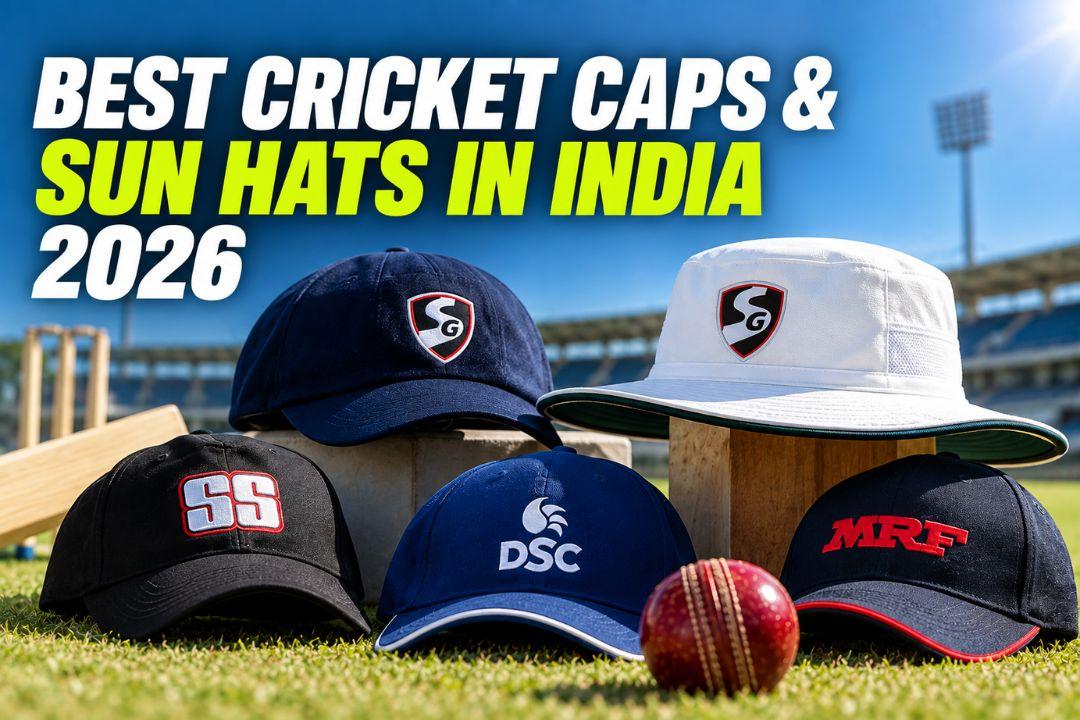
QUICK ANSWER For most Indian conditions, a well-ventilated cricket cap like the SS Marwari Stallion Cap offers the best balance of sun protection, sight-line visibility, and breathability for fielding and batting. Wide-brim sun hats are a strong alternative for umpires, coaches, and players prioritizing maximum neck and ear coverage over a traditional cap silhouette. |
Long fielding stints and full-day matches under harsh Indian sun expose players to hours of direct UV exposure, heat exhaustion risk, and the very real performance cost of squinting against glare while trying to track a cricket ball. Many players either skip headwear entirely (thinking it's optional) or wear whatever cap is lying around, without considering whether it actually fits well enough to stay put during a sprint to the boundary or blocks glare effectively enough to track a high catch against a bright sky.
Squinting against sun glare measurably slows your reaction time when tracking a ball — whether you're a fielder judging a skyer or a batter picking up length against a bowler running in with the sun behind them. Beyond performance, prolonged sun exposure without adequate head and neck protection increases heat-related fatigue over a full day's play, which quietly degrades concentration and decision-making in the closing overs of a long match. A properly fitted, breathable cap addresses both the immediate performance issue (glare, sight lines) and the longer-term health issue (sun exposure, heat management).
Built specifically with cricket in mind, the Marwari Stallion Cap uses a traditional structured six-panel design with a firm, appropriately sized peak that blocks overhead glare without obstructing your upward sight line when tracking a high ball — a common complaint with oversized or poorly angled peaks. The breathable fabric construction helps manage heat build-up during long fielding stints, while the structured fit stays secure through sprints and dives rather than shifting or flying off mid-play.
Best for: Fielders and batters who want traditional cap styling with genuine on-field performance — secure fit, effective peak angle for glare-blocking, and breathable comfort across a full day's play.
• Check peak angle, not just presence of a peak. A peak that sits too flat won't block overhead sun; one angled correctly shields your eyes without limiting your upward field of view for catches.
• Combine a cap with sunscreen on exposed skin. Even a good cap only protects your scalp and partial face — ears, neck, and exposed forearms still need sun protection during long fielding sessions.
• Size for a secure fit during movement, not just standing comfort — try turning your head quickly or miming a dive to check the cap stays in place.
• Rotate two caps if you play frequently — letting sweat-soaked headwear fully dry between sessions extends its lifespan and keeps it more hygienic.
Factor | Structured Cricket Cap (e.g., Marwari Stallion) | Wide-Brim Sun Hat |
Sun protection area | Face & scalp | Face, scalp, neck, ears (broader coverage) |
Fit security during play | Excellent — stays secure through running/diving | Can shift more during fast movement |
Sight-line for catching | Good — traditional peak angle | Can be more restrictive depending on brim width |
Best for | Active fielders, batters | Umpires, coaches, players prioritizing max coverage |
Breathability | Good, especially with ventilated fabric | Good, but less structured airflow |
Rule of thumb: Active fielders and batters should prioritize a structured, secure-fitting cap like the Marwari Stallion. Players in support roles who move less (umpiring, scoring, coaching from the sideline) may prefer the broader coverage of a wide-brim sun hat.
Picture a fielder stationed at deep square leg under a harsh 2 PM sun, with the bowler running in from an angle that puts the sun almost directly behind them. A skyer goes up off a mistimed pull shot, and the fielder has a split second to pick up the ball's flight against a glaring sky. Without a properly angled cap peak, that split-second is spent squinting rather than tracking — and a dropped catch under these conditions is one of the most common, and most preventable, fielding errors in outdoor cricket. A well-fitted cap with an effectively angled peak removes glare from the equation entirely, letting the fielder track the ball cleanly from the moment it leaves the bat, which is exactly the kind of small equipment decision that shows up as a genuine difference in a match's outcome.
Headwear isn't an optional accessory in Indian cricket conditions — it's a performance and health essential. The SS Marwari Stallion Cap delivers the combination that active players need most: secure fit through movement, effective glare-blocking without restricting sight lines, and breathable comfort across long, hot days on the field. Whichever style you choose, don't treat sun protection as an afterthought — it affects both your performance and your long-term health.
1. What's the best cricket cap for Indian summer conditions?
A breathable, structured cap with a properly angled peak — like the SS Marwari Stallion Cap — offers the best combination of glare protection, secure fit, and airflow for hot Indian conditions.
2. Do cricket caps actually improve on-field performance?
Yes — reducing sun glare measurably improves reaction time when tracking a ball, whether fielding a catch or picking up a bowler's length as a batter, making appropriate headwear a genuine performance factor.
3. Should fielders wear a cap or a wide-brim sun hat?
Active fielders generally benefit more from a structured cap that stays secure during running and diving, while wide-brim hats suit less mobile roles like umpiring or coaching, where broader sun coverage matters more than a secure athletic fit.
4. How do I make sure a cricket cap fits securely during play?
Test the cap's fit by miming quick head turns, running, or a dive before match day — a cap that shifts or threatens to fly off during these movements needs a size or strap adjustment.
5. Is sunscreen still necessary if I'm wearing a cricket cap?
Yes — a cap primarily protects your scalp and shades your face but doesn't cover exposed skin like your neck, ears, or forearms, so sunscreen remains essential for full sun protection during long matches.
Beat the glare and the heat this season — shop the SS Marwari Stallion Cap at SportsGear24x7.
The SportsGear24x7 Editorial Team is a group of passionate cricket enthusiasts and equipment specialists based in New Delhi, India. With over a decade of experience in the cricket gear industry, our team has helped thousands of players — from beginners to state-level competitors — find the right equipment for their game. Every article we publish is backed by real product knowledge, on-ground player feedback, and deep understanding of the Indian cricket ecosystem.