Batting Gloves vs Wicketkeeping Gloves: Key Differences Every Cricketer Should Know
Updated 5 min read


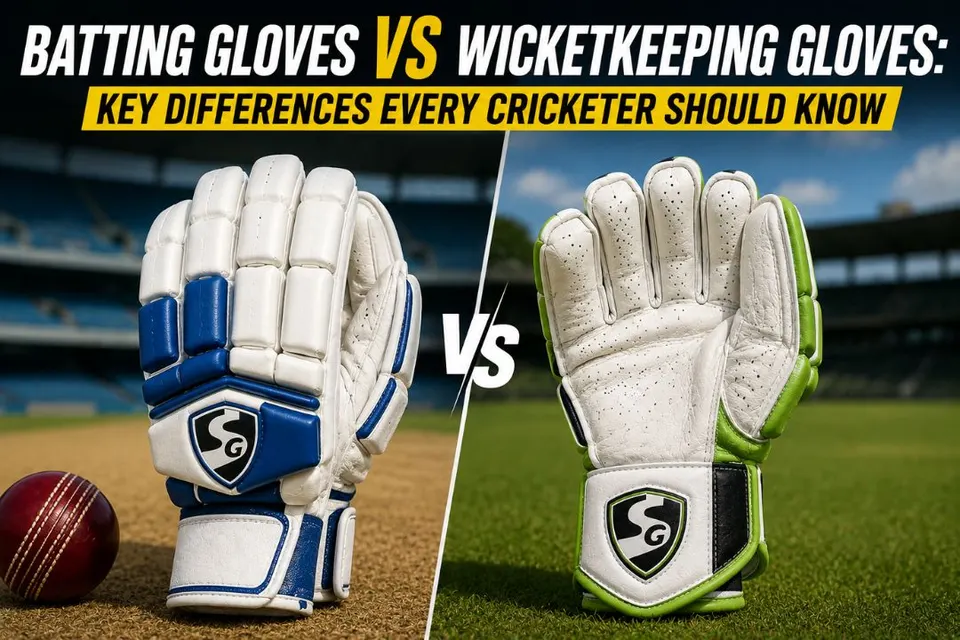
New cricketers, and even some club-level all-rounders who bat and keep wicket, occasionally make an expensive mistake: assuming a glove is a glove. It isn’t. Batting gloves and wicketkeeping gloves are engineered to solve entirely different physical problems, and using the wrong one in the wrong role compromises both protection and performance.
This guide breaks down exactly how these two glove types differ, why the difference matters, and how to choose correctly for your role.
A batter’s hands need to absorb vibration and impact transmitted through the bat handle when facing a fast delivery, while still allowing enough dexterity to control shot placement. A wicketkeeper’s hands need to absorb the direct, repeated impact of a hard ball travelling at speed into an open palm — hundreds of times across a single day’s play — while maintaining the flexibility to close instantly around the ball.
Using a batting glove behind the stumps leaves a keeper’s palm under-protected against direct impact. Using a wicketkeeping glove to bat restricts the grip and bat feel a batter needs to control the willow.
Batting gloves are designed around three priorities:
• Finger and knuckle protection: High-density foam padding sits over the top of the fingers and knuckles — the area most exposed to a fast, rising delivery.
• Palm grip: The palm uses tanned or synthetic leather designed to grip the bat handle securely, especially in humid conditions where sweat is a factor.
• Flexibility at the wrist and fingers: Enough mobility remains for a batter to adjust grip mid-shot without the glove restricting bat control.
Wicketkeeping gloves solve a completely different problem:
• Palm padding, not knuckle padding: The heaviest padding sits across the palm, since that’s where the ball makes contact during a take.
• Webbing between thumb and fingers: This closes the gap where sharp chances down the leg side or in front of the stumps are most commonly missed.
• A snugger, more segmented fit: Wicketkeeping gloves are cut to let the keeper “cup” the ball on impact rather than simply block it.
• Inner gloves underneath: Most keepers wear a thin cotton or foam-padded inner glove beneath the outer gloves for sweat absorption and an extra cushioning layer.
Feature | Batting Gloves | Wicketkeeping Gloves |
Primary padding zone | Fingers and knuckles | Palm |
Grip surface | Leather, optimised for bat handle | Rubberised/tacky, optimised for ball contact |
Webbing | None or minimal | Thumb-index webbing standard |
Worn with inner gloves? | Sometimes (thin cotton inner) | Almost always |
Flexibility priority | Bat control | Instant hand closure around the ball |
If you bat: Prioritise finger padding and a palm material that won’t slip when wet. Fit should be snug but never restrict your grip on the bat handle — test by actually gripping a bat in-store or checking size charts carefully when buying online.
If you keep wicket: Prioritise palm padding depth and webbing coverage. Always pair with a good pair of inner gloves — skipping this step is one of the most common mistakes new keepers make, leading to blisters within a single session.
If you do both: Own separate, dedicated gloves for each role. This is non-negotiable at any serious level of cricket — the compromises required to make one glove do both jobs well simply don’t exist.
For batting, the DSC Condor Glider Batting Gloves offer strong finger and knuckle padding with a leather palm built for grip.
For wicketkeeping, the SS WK Gloves Professional deliver the palm padding and webbing structure a serious keeper needs.
Don’t forget the inner layer — the DSC WK Inner Gloves Surge provide sweat absorption and extra cushioning beneath your outer keeping gloves.
Browse the complete range in our Cricket Gloves collection.
• Break in new gloves before a match, not during one — flex the padding and wear them during net sessions first.
• Air-dry gloves after every session. Sweat trapped inside foam padding shortens its lifespan and can cause odour and material breakdown.
• Replace batting gloves when finger padding visibly compresses, and replace keeping gloves when the palm padding flattens or webbing tears — both reduce protection well before they look obviously worn.
• Size correctly. An oversized glove reduces feel and control in both disciplines; an undersized one restricts blood flow and comfort over a long innings or day in the field.
Batting gloves and wicketkeeping gloves look superficially similar but are engineered for completely different physical demands. Understanding that difference — and buying accordingly — protects your hands properly and gives you the control and confidence each role actually requires.
Q: Can I use wicketkeeping gloves for batting in an emergency?
It’s not recommended. The reduced dexterity and different padding placement will noticeably affect bat control, and the palm padding isn’t positioned to protect your fingers from a fast delivery.
Q: Do I need inner gloves if I already have padded wicketkeeping gloves?
Yes. Inner gloves absorb sweat and add a cushioning layer that extends the life of your outer gloves and improves comfort significantly, especially over a full day of keeping.
Q: How do I know when to replace batting gloves?
When the padding over the knuckles and fingers compresses and no longer springs back, or when the palm leather has worn thin and lost grip.
Q: Are wicketkeeping gloves sized differently from batting gloves?
Yes — sizing charts differ by brand and glove type, so always check the specific size guide for the glove category you’re buying rather than assuming your batting glove size applies.
The SportsGear24x7 Editorial Team is a group of passionate cricket enthusiasts and equipment specialists based in New Delhi, India. With over a decade of experience in the cricket gear industry, our team has helped thousands of players — from beginners to state-level competitors — find the right equipment for their game. Every article we publish is backed by real product knowledge, on-ground player feedback, and deep understanding of the Indian cricket ecosystem.