Why Cricket Footwear Science Matters: How the ID1 by Idoneus Sports is Reducing Injuries and Extending Playing Careers
Updated 9 min read


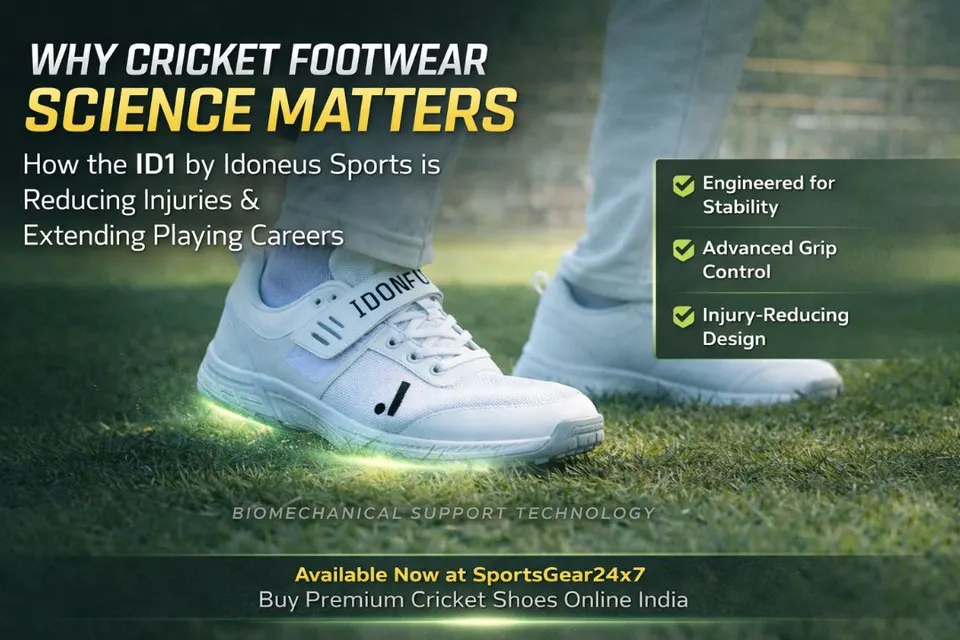
Every year, thousands of cricketers at every level, from club to professionals, walk off the ground with sore feet, aching knees, and tired legs. Most write it off as part of the game. They stretch more, ice their joints, and lace up the same boots the following weekend. What very few players consider is that their footwear could be the primary cause of their discomfort; and potentially the source of more serious, long-term injury.
The numbers are striking. Research shows that 38% of all cricket injuries are footwear-related, and that the force exerted on a bowler's front foot during a delivery stride reaches up to 8 times their body weight. Yet the majority of cricket shoes on the market are adapted from running or tennis footwear; designs built for entirely different movement patterns and loading profiles.
This is the gap that Idoneus Sports identified, and the problem their flagship shoe, the ID1, was specifically engineered to solve. More than just a comfortable cricket shoe, the ID1 represents a serious application of podiatric and exercise physiology science to the long-neglected world of cricket footwear. Here's why that matters — and how it could protect your playing career.
Cricket is unlike most other sports in terms of foot loading. It combines prolonged static standing (fielding), explosive multi-directional movement (chasing, diving, changing direction), rotational forces through the ankle (bowling), and repetitive impact across uneven or abrasive surfaces.
A pace bowler, for example, may run in and deliver the ball 20 to 30 times per spell, with each delivery stride generating enormous force through the foot and ankle. Over a career spanning years, that cumulative load adds up to significant wear on joints, tendons, and soft tissue; particularly when the footwear is not equipped to manage it.
Batsmen face different but equally real challenges. Hours of standing, the explosive drive through the crease, the rapid sprint between wickets; all of these demand lateral support, cushioning, and stability that generic cricket shoes typically fail to provide.
Fielders, often overlooked in footwear discussions, spend entire sessions on hard or abrasive surfaces with minimal dynamic movement to activate natural circulation and comfort mechanisms. Without adequate cushioning and arch support, this leads to plantar fatigue, heel pain, and progressive joint stress.
A podiatrist evaluates how the foot functions during activity — how weight is distributed, how the arch behaves under load, where pressure concentrates, and what structural support is needed to prevent injury. An exercise physiologist understands how the body generates and absorbs force across different movement patterns.
The ID1 by Idoneus Sports was designed with both disciplines at the table. Developed in Perth, Western Australia by a team that includes a professional with a Master's in Clinical Exercise Physiology and input from a Sports Podiatrist with over 45 years of expertise, the ID1 is built on clinical knowledge of how cricketers' feet actually function in the game, not assumptions borrowed from other sports.
According to Idoneus, proper cricket-specific footwear design can reduce injury risk by as much as 41%. That figure alone should prompt every serious cricketer to reconsider what they're wearing.
One of the most immediate contributors to foot fatigue and injury in cricket is inadequate cushioning. The ID1 features a multi-density cushioning system designed to absorb and distribute impact forces across the entire foot. Rather than relying on a single foam compound, the layered approach targets different pressure zones — giving the heel, midfoot, and forefoot tailored levels of support based on how each area is loaded during cricket-specific movements.
The result is noticeably reduced fatigue across long sessions. Players who have used the ID1 consistently report fresher legs at the end of the day — a direct indicator that the shoe is doing its job of managing cumulative load.
Narrow toe boxes are one of the most common — and damaging — features of conventional cricket footwear. When the toes are compressed, the foot cannot function as it is anatomically designed to. The natural toe splay that helps balance and distribute load is eliminated, forcing unnatural stress patterns up through the foot, ankle, knee, and hip.
The ID1's ergonomically wide toe box allows the toes to spread naturally during every stride and delivery. This seemingly simple design choice has significant downstream effects: it reduces bunion formation, decreases plantar pressure, and improves overall biomechanical alignment through the lower limb. Over a playing career, this translates to fewer overuse injuries and less joint degradation.
Ankle injuries are among the most common in cricket, particularly for bowlers whose delivery action creates powerful rotational forces through the joint. The ID1 addresses this with a dual-mechanism ankle support system: a strategically positioned ankle strap working in combination with a structured heel counter.
Together, these features lock the rear foot firmly in place, preventing the micro-instabilities that over time lead to ankle sprains, Achilles tendinopathy, and chronic joint stress. The runners' knot eyelet provides an additional layer of adjustment, allowing players to customize the level of lockdown to suit their position and playing style.
This is not a cosmetic feature — it is a clinically informed design decision based on the real injury patterns that podiatrists see in cricketers.
Shoe weight is an underappreciated injury variable. Heavier footwear increases the energy cost of every stride and adds to the cumulative muscular load across a session. Over five or six hours on the field, this matters enormously in terms of fatigue, form, and injury susceptibility.
At just 320 grams, the ID1 is built with a lightweight knit upper that significantly reduces this burden. Less weight on the foot means the muscles of the lower leg do less work to lift and propel the foot with every stride — conserving energy, maintaining form later in the day, and reducing the fatigue-driven movement compensations that often lead to injury.
Playing surface has a direct impact on injury risk. Hard, abrasive pitches generate greater impact forces than grass. Slippery or uneven surfaces increase the likelihood of acute ankle and knee injuries from slips or sudden changes of direction.
The ID1's all-surface outsole is designed to perform on turf, coir matting, and hard grounds — the three surfaces most commonly found in club and recreational cricket, particularly across South Asia and Australia. It also comes with two complete sets of spikes in the box, meaning players can adapt their grip setup to the specific conditions without additional expense.
The ID1 is designed for any cricketer who plays regularly and values both performance and physical longevity. It is particularly well suited for:
Fast and medium-pace bowlers who place extreme loads on their feet and ankles with every delivery
All-rounders who spend long periods both batting and fielding across varied surfaces
Older or injury-prone players looking to extend their playing careers by managing cumulative foot stress
Club cricketers who play multiple times per week and cannot afford extended recovery time from avoidable injuries
Coaches and parents investing in quality gear for young developing cricketers whose joints and growth plates are particularly vulnerable to poor footwear
The clinical credibility behind the ID1 is backed up by real-world validation. The shoe holds a 4.9-star rating from over 20 verified reviews, with players specifically citing reduced soreness, improved support during long bowling spells, and a noticeable difference in how their legs feel at the end of a session.
Professional and representative-level cricketers including Deandra Dottin, Dom Bess, Corey Rocchiccioli, Brooke Guest, and others have adopted the ID1 as their footwear of choice — a meaningful endorsement from players whose careers depend on staying physically sound.
Podiatrists who have seen patients wearing the ID1 have reportedly recommended their clients stick with the shoe — and have reached out to Idoneus directly to learn more about how to direct other patients toward it.
Beyond injury prevention, the ID1 includes features that support confident, long-term investment:
1-Year Warranty:Manufacturing faults within the first year are replaced, no questions asked
30-Day Return Guarantee:If the fit isn't right, the shoe can be returned within 30 days for a full refund
Vegan-Friendly Materials:High-quality, cruelty-free construction that doesn't compromise durability
LDPE Recyclable Packaging: An eco-conscious choice for environmentally aware players
In cricket, your feet are your foundation, for every delivery, every stroke, every sprint to the boundary. Neglecting what goes on them is not just a comfort issue; it's a health and career decision that compounds over time. The right footwear won't just make your feet feel better. It will keep you on the field longer, performing better, and doing what you love well into the future.
The ID1 by Idoneus Sports is the most scientifically grounded cricket shoe available today — purpose-built for the game, podiatrist approved, and validated by players at every level. If you take your cricket seriously, it's time to take your footwear seriously too.
Q: Can the ID1 prevent cricket injuries?
A: The ID1 is designed with podiatrist-backed features — including a wide toe box, ankle strap, heel counter, and multi-density cushioning — that directly address the most common causes of footwear-related cricket injuries. Research cited by Idoneus Sports suggests proper cricket-specific footwear can reduce injury risk by up to 41%.
Q: Is the ID1 suitable for fast bowlers?
A: Yes. The ankle strap and heel counter system specifically targets the rotational forces generated during a fast bowling delivery stride, providing the support and stability that pace bowlers require.
Q: What surfaces can the ID1 be used on?
A: The ID1 is designed for turf, coir matting, and hard grounds. It comes with two sets of spikes in the box to accommodate different surface conditions.
Q: How much does the ID1 cost?
A: The ID1 is priced at $110 USD and is available at idoneussports.us. Indian cricketers can find it via sportsgear24x7.com.
Q: Does the ID1 come with a warranty?
A: Yes. All ID1 shoes come with a 1-year manufacturer's warranty and a 30-day satisfaction return guarantee.
The SportsGear24x7 Editorial Team is a group of passionate cricket enthusiasts and equipment specialists based in New Delhi, India. With over a decade of experience in the cricket gear industry, our team has helped thousands of players — from beginners to state-level competitors — find the right equipment for their game. Every article we publish is backed by real product knowledge, on-ground player feedback, and deep understanding of the Indian cricket ecosystem.