Wicket-Keeping Gear Guide: Gloves, Pads & Inners for 2026
Updated 7 min read


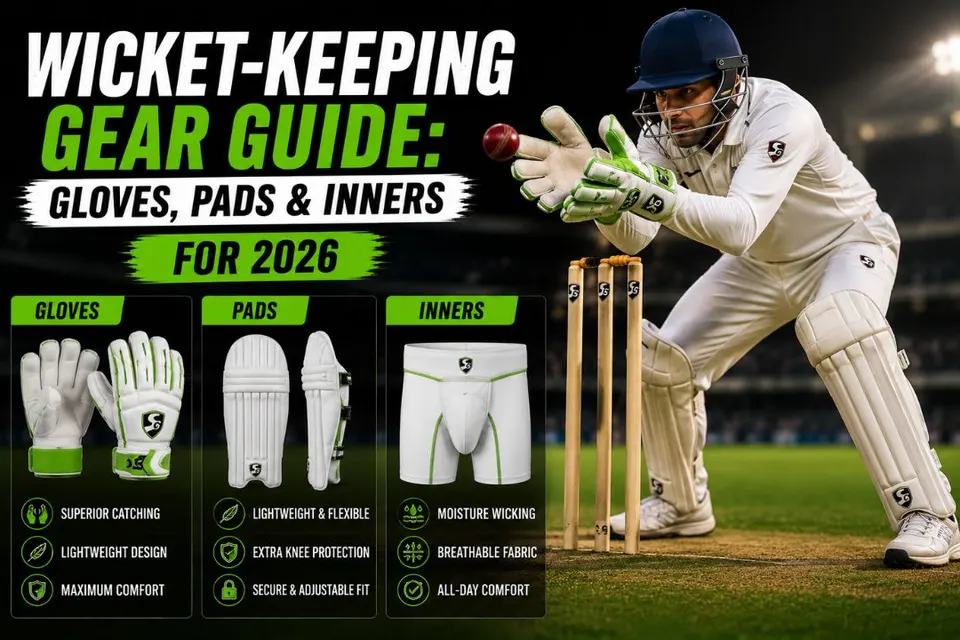
Wicket-keeping is arguably the most physically demanding position on a cricket field — hundreds of low squats an innings, split-second lateral movement, and the constant risk of a fast, unpredictable ball catching a finger at an awkward angle. Yet keeping gear is often the most neglected part of a player's kit. Many club-level keepers still use batting gloves modified for keeping, or pads that are technically leg guards rather than purpose-built keeping pads.
This guide breaks down exactly what makes keeping gloves, pads, and inners different from regular batting protection — and how to choose gear that actually supports the movements specific to standing behind the stumps.
Most beginner and intermediate cricketers buy a full batting kit — bat, pads, gloves, helmet — long before they think about keeping-specific gear. If they're asked to keep wicket in a pinch, they often just use their batting gloves. The problem is that batting gloves are designed for gripping a bat handle, not for the open-palm catching motion keepers need. Similarly, standard leg guards restrict the deep squatting position keepers hold for entire overs, causing unnecessary fatigue and reduced mobility exactly when quick reflexes matter most.
A wicket-keeper's hands take a different kind of impact than a batter's. Instead of absorbing the shock of hitting a ball with a bat, keeping gloves absorb the ball's full impact directly into the palm, repeatedly, over an entire innings. Poor padding in this exact zone leads to bruised palms, jammed fingers, and — over a season — genuine long-term hand injuries.
Keeping pads face a different challenge: mobility. A keeper needs to go from a crouched stance to a full lateral dive in a split second. Pads that are too bulky or rigid slow that movement down, while pads with too little protection leave the shins exposed to deflections and mis-fields.
Palm padding and pocket depth. The "pocket" — the padded webbing between thumb and index finger — is where most of the ball's impact lands. A deeper, well-cushioned pocket absorbs impact better and reduces ball spillage on takes.
Finger protection without stiffness. Good keeping gloves use segmented foam padding across the fingers that protects against direct hits without restricting the natural flex needed to close around the ball quickly.
Breathability. Keepers wear gloves for the entire duration of fielding, often in hot, humid conditions. Mesh backing and breathable leather palms reduce sweat build-up, which directly affects grip and comfort over a long day in the field.
Budget tiers to know:
● Under ₹500: Entry-level gloves suitable for beginners and school-level cricket — basic padding, shorter lifespan under regular use.
● ₹500–₹1,000: The sweet spot for most club-level keepers — solid palm padding, better durability, reasonable breathability.
● ₹1,000+: Premium gloves with reinforced pockets, superior leather, and designs used by semi-professional and representative-level keepers.
Keeping pads are noticeably shorter and lighter than batting leg guards, for a specific reason — keepers need unrestricted knee movement for the constant crouch-and-rise motion of the position. A batting pad's longer knee roll and thigh coverage would be excessive weight and bulk for keeping duties, where the ball rarely strikes above the shin with real force.
Key features to check:
● Lightweight foam core — keeping pads prioritize mobility over maximum impact absorption, since the risk profile is different from facing a fast bowler directly.
● Secure strap system — pads that shift during a dive or lateral movement are worse than useless. Look for a two- or three-strap system with reliable buckles, not just velcro alone.
● Ventilation — keeping involves near-constant movement in a crouched position, so breathable padding matters more here than almost anywhere else in a cricket kit.
Inner gloves — thin cotton or moisture-wicking gloves worn underneath the outer keeping glove — serve two purposes that are easy to underestimate. First, they absorb sweat that would otherwise soak into the outer glove's palm padding, extending the glove's usable lifespan significantly. Second, they reduce friction-based blistering, which is a genuinely common issue for keepers training multiple sessions a week.
A pair of decent inners costs a fraction of the outer gloves but meaningfully extends how long your primary gloves stay in good condition — this is one of the best value-for-money additions any keeper can make to their kit.
School and beginner-level keepers: Entry-level gloves under ₹500 paired with basic keeping pads and a set of cotton inners. Focus on comfort and fit over premium materials at this stage — technique development matters more than gear specification.
Club-level and regular weekend keepers: Mid-range gloves (₹500–₹1,000) with a deeper pocket and reinforced palm, paired with lightweight keeping pads designed for repeated crouching. Moisture-wicking inners are worth the small upgrade over basic cotton at this level.
Serious or representative-level keepers: Premium gloves with maximum durability and pocket depth, paired with pads that balance protection with minimal weight. At this level, having a spare set of gloves for tournament days (in case of a mid-match tear or wetness) is a smart practical investment.
● Never let keeping gloves dry in direct sunlight — this dries out the leather and cracks the palm padding far faster than natural air drying in shade.
● Rotate between two pairs if you keep wicket regularly (3+ sessions a week). Giving gloves a full day to air out between uses significantly extends their lifespan.
● Check strap integrity on pads every few months — a strap that fails mid-match during a dive is a genuine safety risk, not just an inconvenience.
● Replace inners more frequently than outer gloves. Because inners absorb the most sweat and friction, they wear out faster and are inexpensive enough to replace every season without much cost impact.
Budget | Gloves | Pads | Inners |
Under ₹1,500 total | Entry-level (₹400–500) | Basic lightweight pads | Cotton inners |
₹1,500–₹3,000 total | Mid-range (₹700–1,000) | Reinforced strap pads | Moisture-wicking inners |
₹3,000+ total | Premium reinforced pocket | Premium lightweight foam | Multiple sets of inners |
Wicket-keeping demands gear built for its specific physical demands — deep palm protection for repeated impact, lightweight pads that don't restrict the crouch-and-dive motion, and inner gloves that quietly extend the life of everything else in the kit. Treating keeping gear as simply "smaller batting gear" undersells what the position actually requires. Invest in gloves with real pocket depth, pads built for mobility, and don't skip the inners — together, they make the difference between a keeper who's comfortable through a full day in the field and one who's managing sore hands by the tenth over.
Explore the complete wicket-keeping range at SportsGear24x7 — wicket-keeping gloves, wicket-keeping inner gloves, and leg guards/pads from SG, SS, and DSC across every budget tier.
Q1. Can I use batting gloves for wicket-keeping?
Not recommended for regular keeping. Batting gloves are designed to grip a bat handle, not to catch and cushion repeated ball impact in an open palm. Purpose-built keeping gloves have deeper palm padding specifically for this.
Q2. Are wicket-keeping pads the same as batting pads?
No. Keeping pads are shorter, lighter, and prioritize mobility for the crouch-and-dive motion, while batting pads are longer and prioritize maximum protection against fast, direct deliveries to the leg.
Q3. How often should I replace wicket-keeping gloves?
With regular use (2–3 sessions a week), expect to replace gloves every 6–12 months as padding compresses and the palm leather wears thin from repeated impact.
Q4. Are inner gloves really necessary for wicket-keeping?
Yes — inners absorb sweat, reduce blistering, and significantly extend the lifespan of your outer gloves. They're inexpensive relative to the protection and durability benefit they provide.
Q5. What's the ideal budget for a first wicket-keeping kit?
A solid starter kit — gloves, pads, and inners — typically costs between ₹1,200 and ₹2,000 for reliable, entry-to-mid-level gear suitable for school and club cricket.
The SportsGear24x7 Editorial Team is a group of passionate cricket enthusiasts and equipment specialists based in New Delhi, India. With over a decade of experience in the cricket gear industry, our team has helped thousands of players — from beginners to state-level competitors — find the right equipment for their game. Every article we publish is backed by real product knowledge, on-ground player feedback, and deep understanding of the Indian cricket ecosystem.