
Pickleball Net Buying Guide: Portable vs Permanent — Which Should You Choose?
4 min read
On this page
Pickleball’s explosive growth in India means more players are setting up courts wherever space allows — driveways, community halls, converted badminton courts, and dedicated club facilities. Every one of those setups needs a net that’s the right type, the right height, and durable enough for regular use. This guide breaks down exactly what to look for.
The Problem: Not All Nets Are Built for the Same Use Case
A net that’s perfect for a weekend backyard game is often the wrong choice for a club running daily sessions, and vice versa. Buying based on price alone, without matching the net type to how and where you’ll actually use it, leads to nets that sag out of regulation height within weeks or that are too heavy and awkward to set up for casual, occasional play.
Portable vs Permanent Nets: The Core Difference
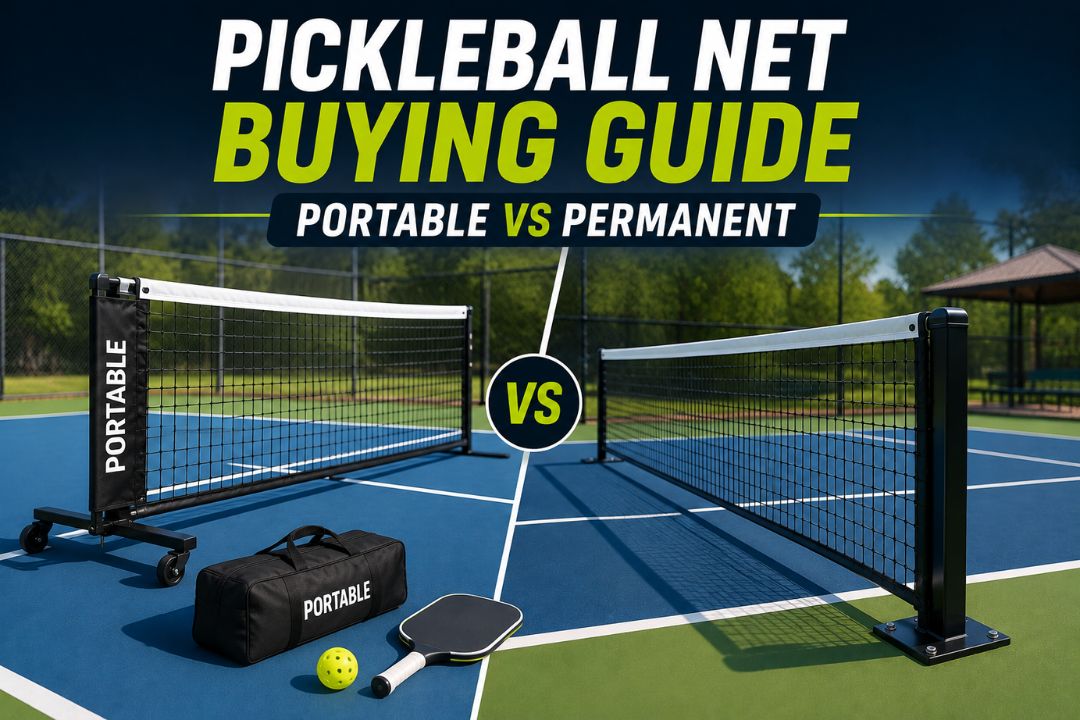
Portable nets use a lightweight, often collapsible frame that can be set up and taken down in minutes, making them ideal for shared spaces, temporary courts, or anyone who doesn’t have a dedicated permanent play area.
Permanent nets are installed with fixed posts set into the ground, offering the stability and consistent height regulation demands, but requiring a dedicated, unshared court space.
Factor | Portable Net | Permanent Net |
|---|---|---|
Setup time | Minutes | Fixed installation, one-time setup |
Best for | Shared spaces, home courts, clubs without dedicated courts | Dedicated club courts, community facilities |
Height stability | Requires regular checking/adjustment | Consistent once installed |
Portability | High — pack away after use | None — permanently fixed |
Cost over time | Lower upfront, may need earlier replacement | Higher upfront, longer lifespan |
What to Check When Buying a Pickleball Net
1. Regulation net height. Official pickleball nets sit at 36 inches at the sidelines and 34 inches at the centre — check that any net you buy holds this specification, since even a small deviation changes game dynamics.
2. Frame material and stability. Look for a sturdy frame that resists sagging under the net’s own tension over repeated use — this is the single most common complaint with lower-quality portable nets.
3. Ease of height adjustment. A net with a simple, reliable adjustment mechanism saves real time if multiple groups are sharing a single portable net across a session.
4. Weather resistance, if the net will be used or stored outdoors — UV-resistant netting and rust-resistant frame components matter for longevity in Indian outdoor conditions.
5. Carry case and portability, for anyone transporting a net between locations regularly.
Who Should Choose Which?
• Casual and home players: A portable net offers the flexibility to set up in a driveway, park, or shared court and pack away afterward.
• Coaching sessions and clubs without a dedicated court: Portable nets that hold regulation height reliably are essential, since inconsistent height directly affects training quality.
• Dedicated pickleball facilities and community centres: A permanent net installation offers the long-term durability and consistency that daily, high-volume use demands.
Shop Pickleball Nets and Gear
SportsGear24x7 stocks pickleball equipment from Synco, a brand known specifically for meeting official size and quality standards across paddles, balls, and nets. Browse the complete range in our Pickleball collection and explore Synco’s full pickleball range for paddles, balls, and net options suited to your setup.
Note: individual net product pages weren’t available to link directly at the time of writing — the categories above will show current in-stock net options.
Practical Setup Tips
• Always measure and check net height before starting a session — even a well-built portable net can sag slightly over time and needs periodic re-tensioning.
• Store nets away from direct sun and moisture when not in use to extend the life of the netting material.
• Anchor portable nets properly on hard surfaces, using weighted bases or sandbags where available, since wind and repeated ball contact can shift a poorly secured frame during play.
• Check your net before every session if it’s shared community equipment — height and tension can drift between uses if multiple groups are adjusting it.
Conclusion
Whether you’re setting up a casual backyard court or outfitting a community facility, the right net comes down to matching the type — portable or permanent — to how consistently and where you’ll actually be playing. Getting the regulation height and build quality right from the start means more consistent play and fewer disputes over “was that in or out of the net’s real height.”
Frequently asked questions
Q: What is the official pickleball net height?
36 inches at the sidelines and 34 inches at the centre of the net — this is the regulation specification used in official play.
Q: Can I use a badminton net for pickleball?
Not for regulation play. Badminton nets are taller and use different tensioning, which changes gameplay dynamics significantly. A dedicated pickleball net is recommended even for casual play if consistency matters.
Q: How long does a portable pickleball net typically last?
With proper storage and care, a quality portable net can last several seasons of regular use, though frequent setup and takedown will naturally wear the frame joints faster than a permanent installation.
Q: Do I need a permanent net if I only play occasionally?
No — a good-quality portable net that reliably holds regulation height is sufficient for occasional and recreational play, and offers far more flexibility for shared or multi-use spaces.