How to Wash and Care for Cricket Whites — Keep Your Playing Kit Fresh All Season
Updated 6 min read


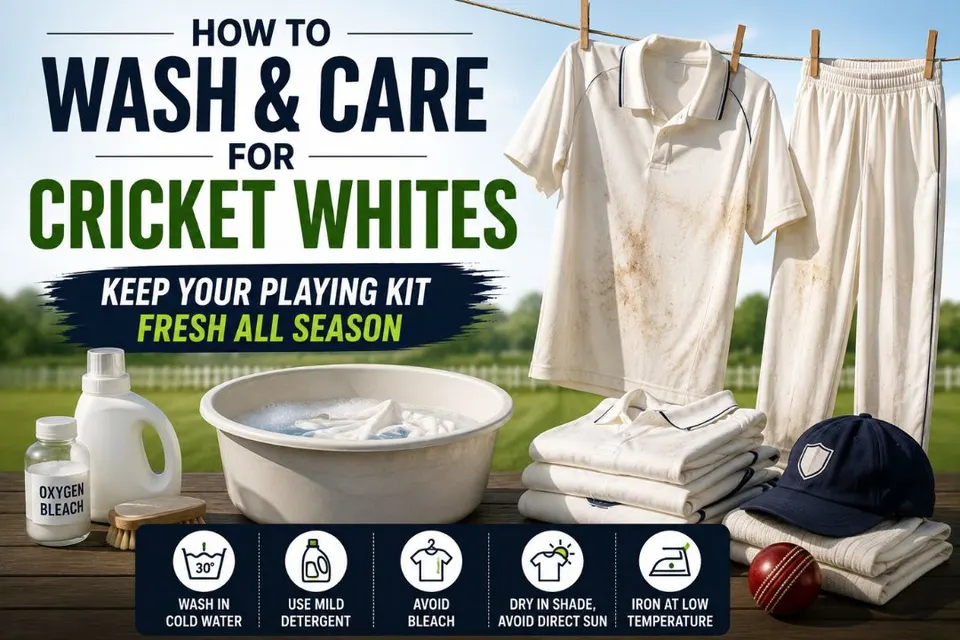
You have spent money on a quality cricket playing kit. After your first match, the trousers come home with grass stains on both knees, a mud streak down the thigh from a sliding stop, and a sweat ring around the collar that has already started to yellow. Welcome to cricket. The way you wash and care for your cricket whites determines whether they last one season or four. The wrong technique permanently damages the fabric and the colour. The right technique keeps your playing kit clean, white, and performing across multiple seasons.
Most cricket playing kits are made from a polyester-cotton blend or 100% polyester. These synthetic fabrics are more resistant to shrinking but far more susceptible to yellowing under high heat. They dry faster but set stains more permanently if left untreated. They are more colour-stable when washed cold but discolour rapidly under UV exposure if left wet in sunlight. Understanding your kit's fabric type is the first step. Check the label inside your shirt or trousers for the care symbol guide before washing.
Grass stains: Apply liquid washing detergent or a stain remover directly onto the grass stain. Work it gently into the fabric. Let it sit for 20–30 minutes before washing. Never use hot water at this stage — heat sets grass stains permanently.
Mud stains: Let mud dry completely before treating. Scrape off the dried mud with a soft brush. Then treat the remaining stain with a stain remover and let it soak before washing. Washing mud-stained fabric while wet spreads the stain further into the fibres.
Sweat stains (yellowing around collars and armpits): Soak the affected areas in a mixture of warm water and white vinegar (1:1 ratio) for 30 minutes before washing. For stubborn yellowing, a paste of bicarbonate of soda and water applied directly to the yellow area and left for an hour before washing works effectively.
Blood stains: Use cold water only — never hot. Soak in cold salt water for 30 minutes, then wash cold. Hot water coagulates blood proteins into the fabric permanently.
Wash cricket whites at 30°C or cold — never above 40°C. High temperatures yellow white polyester-cotton irreversibly and degrade moisture-wicking performance of synthetic fabrics. Use gentle liquid detergent rather than powder — powder detergents can leave white residue trapped in synthetic fabric weaves. Add a small amount of non-chlorine fabric brightener to maintain whiteness. Do not use chlorine bleach on polyester-cotton cricket kits — it causes a permanent yellowish discolouration.
Tumble drying at high heat is the most common way cricket whites are permanently damaged. High heat sets remaining stains, yellows white fabric rapidly, and causes polyester-cotton to shrink slightly. Correct drying method: Remove from the washing machine immediately. Reshape while damp. Hang to dry in shade or indoors with good air circulation. Never leave wet cricket whites in direct sunlight — UV exposure accelerates yellowing of white synthetic fabrics.
If your cricket whites look creased after drying, iron on a low synthetic setting — not cotton. High-heat ironing damages synthetic fibres and creates permanent shiny patches on polyester-cotton fabric. Use a pressing cloth if ironing directly on a polyester-heavy fabric.
• Always wash inside out — the compression fibre is on the inside and needs protection from abrasion
• Wash cold (30°C maximum) — heat degrades elastane fibres and reduces compression permanently
• Never tumble dry — hang dry only; tumble drying destroys compression gear faster than any other mistake
• Do not wring or twist — compression fabrics are designed for consistent pressure, not lateral twisting
Proper kit care also extends to your accessories. See our must-have cricket accessories guide for tips on maintaining bat grips, inner gloves, and other items that sit in your kit bag between matches.
• Check for permanent stains from last season — treat and wash before the first match or replace
• Check collar and sleeve edges for pilling — polyester-cotton pills at friction points over time
• Check zip function on playing trousers — test before match day
• Wash compression gear before first use of the season — remove manufacturing residues
If your kit no longer fits or has not survived the season's wear, our complete cricket kit guide 2026 covers every item you need to replace with current prices and brand recommendations for shirts, trousers, and compression gear.
For team kit managers handling bulk kit maintenance, see the textile care labelling guidelines from the Bureau of Indian Standards (BIS) for fabric-specific wash symbols and recommended care conditions for polyester-cotton blended sportswear.
• Wash immediately after every match — never store dirty cricket kit even overnight; stains set faster than most players expect
• Store folded flat or hanging in a dry, dark cupboard — UV light near a window causes gradual yellowing even without washing
• Store separately from coloured clothing — white fabric can pick up dye transfer from adjacent dark clothing, especially when stored while slightly damp
Browse the complete cricket clothing range at SportsGear24x7 for replacement playing kits, compression gear, and accessories when your current kit reaches end of season.
Washing cricket whites correctly is simple once you know the rules: treat stains before washing, always wash cold, never tumble dry at high heat, and store clean and dry between matches. Follow these steps consistently and your cricket playing kit will maintain its white appearance, its fit, and its performance properties across multiple seasons.
Q1. How do you remove grass stains from cricket whites?
Apply liquid detergent or a stain remover directly to the grass stain. Let it soak for 20–30 minutes. Wash cold (30°C). Never use hot water on grass stains — heat sets them permanently into the fabric.
Q2. Can I use bleach on cricket whites?
Do not use chlorine bleach on polyester-cotton cricket playing kits. It reacts with polyester fibres and causes permanent yellowing. Use a non-chlorine fabric brightener instead.
Q3. Why are my cricket whites turning yellow?
Cricket whites turn yellow due to high-heat washing or drying, chlorine bleach use, UV exposure while stored or dried, or sweat residue not fully removed in the wash. Always wash cold, dry in shade, and use white vinegar for sweat stain treatment.
Q4. How often should I wash my cricket playing kit?
Wash your cricket playing kit after every match and every training session. Never store used cricket kit unwashed — sweat and bacteria degrade fabric quickly and stains set permanently if left overnight.
Q5. Can I tumble dry cricket whites?
Tumble dry only on a low or air-only setting if necessary. High heat tumble drying yellows white fabric irreversibly and degrades synthetic fibres. Air drying in shade is always the better option.
The SportsGear24x7 Editorial Team is a group of passionate cricket enthusiasts and equipment specialists based in New Delhi, India. With over a decade of experience in the cricket gear industry, our team has helped thousands of players — from beginners to state-level competitors — find the right equipment for their game. Every article we publish is backed by real product knowledge, on-ground player feedback, and deep understanding of the Indian cricket ecosystem.