How to Improve Your Cricket Batting: A Practical Guide for Every Player
3 min read


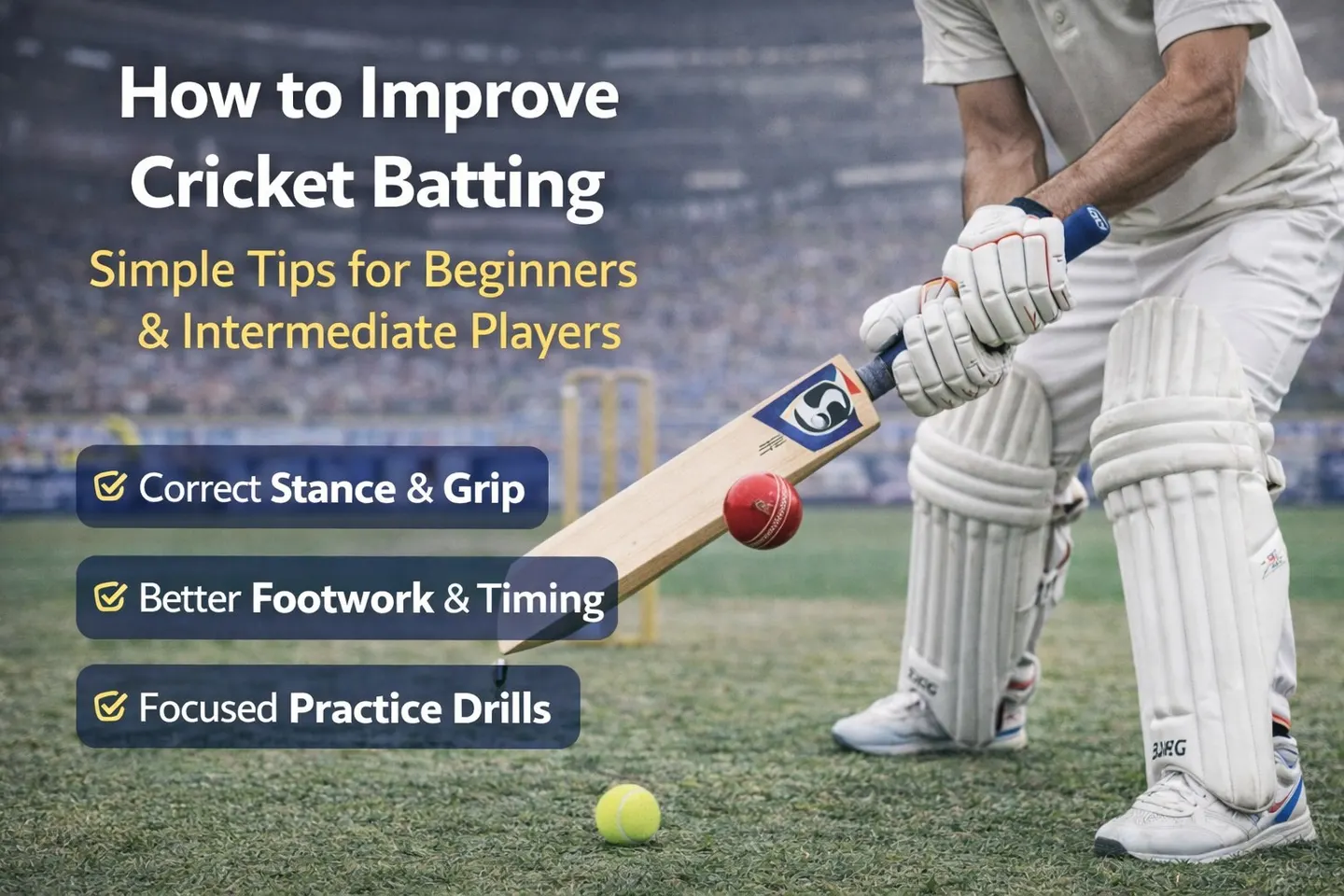
Cricket batting is a skill that combines technique, timing, mental strength, and the right equipment. Whether you’re a beginner struggling with consistency or an intermediate player aiming to score more runs, improving your batting requires focused practice and smart adjustments.
In this guide, we’ll break down simple, effective ways to improve your cricket batting, covering stance, grip, footwork, practice drills, and mindset—without overcomplicating things.
Your stance is the foundation of good batting.
Feet shoulder-width apart
Knees slightly bent
Weight balanced on the balls of your feet
Bat resting comfortably behind your back foot
A relaxed and balanced stance allows quicker movement and better shot execution.
A correct grip gives you control, timing, and shot direction.
Hands close together
“V” shape formed by thumb and index finger
Grip should be firm, not tight
Using a good-quality rubber grip reduces vibration, improves comfort, and prevents the bat from slipping—especially during long innings.
Great batters are known for their footwork.
Practice forward defense and back-foot shots
Move your head towards the ball
Don’t reach for deliveries—go to the ball
Good footwork helps you:
Play the ball late
Find gaps easily
Handle fast bowling and spin better
Beginners often try to hit the ball too hard. Instead:
Let the bat’s weight do the work
Focus on clean contact
Play along the ground initially
Perfect timing will naturally generate power and improve consistency.
Not every ball needs a big shot.
Defend good balls
Attack loose deliveries
Play according to field placements
Learning when not to play a shot is just as important as learning attacking strokes.
To become a complete batter, practice against:
Fast bowling
Swing bowling
Spin bowling
Use throwdowns, bowling machines, or net bowlers to improve adaptability.
Batting is as much mental as it is physical.
Stay patient after dot balls
Don’t panic after a false shot
Focus on one ball at a time
Confidence and calmness help you bat longer and score consistently.
Basic fitness improves balance and stamina.
Helpful exercises:
Skipping
Agility ladder drills
Reaction ball training
Better fitness = better footwork, faster reflexes, and longer innings.
Using the right gear during practice makes a big difference:
Properly sized bat
Comfortable batting gloves
Good-quality pads and shoes
Training with match-level equipment improves confidence and muscle memory.
Improving your cricket batting doesn’t happen overnight—it’s a result of correct technique, regular practice, and using reliable cricket gear. Even small upgrades, like a better bat grip or well-fitted gloves, can noticeably improve control and comfort.
If you’re serious about improving your batting, make sure you train and play with authentic, well-suited cricket equipment. Choosing the right bat, gloves, pads, and shoes from trusted sports gear stores helps you focus on your game—without worrying about performance or safety.
Practice smart. Play confident. Keep improving.
How can beginners improve their cricket batting quickly?
Beginners should focus on correct stance, grip, footwork, and timing rather than power. Regular net practice is essential.
How important is footwork in batting?
Footwork is crucial. Good foot movement helps with balance, timing, and playing shots confidently against all bowlers.
Should beginners focus on power hitting?
No. Beginners should prioritize timing and shot selection. Power comes naturally with proper technique.
Does using the right cricket gear improve batting?
Yes. Proper bats, gloves, grips, and shoes improve comfort, control, and confidence while batting.
How often should I practice to improve batting?
Practicing 3–4 times a week with focused drills is ideal for noticeable improvement.
The SportsGear24x7 Editorial Team is a group of passionate cricket enthusiasts and equipment specialists based in New Delhi, India. With over a decade of experience in the cricket gear industry, our team has helped thousands of players — from beginners to state-level competitors — find the right equipment for their game. Every article we publish is backed by real product knowledge, on-ground player feedback, and deep understanding of the Indian cricket ecosystem.