Cricket Shoes for Batsmen: Why the ID1 by Idoneus Sports Gives You the Footwork Edge at the Crease
Updated 8 min read


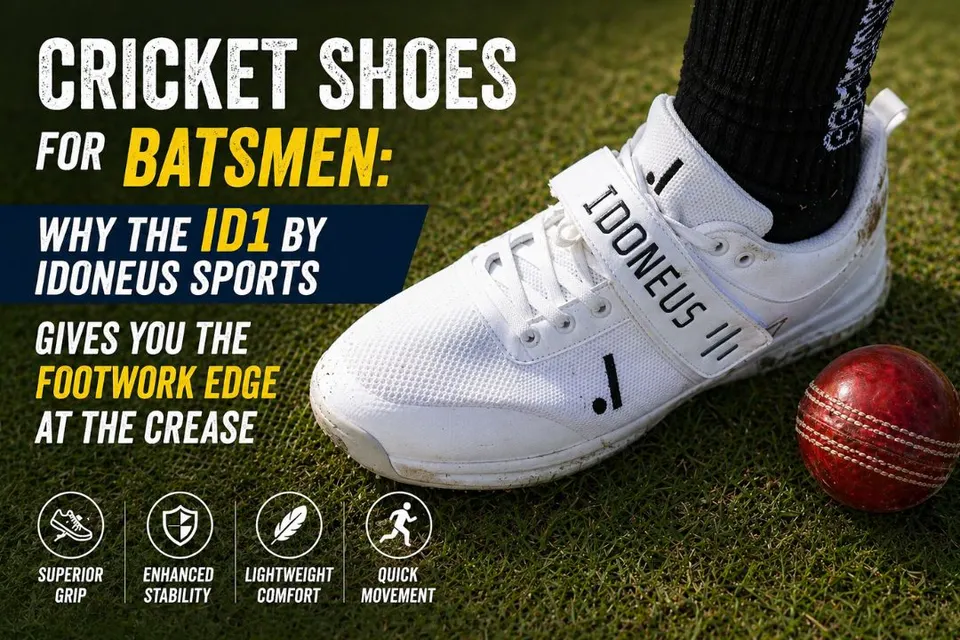
When cricketers talk about improving their batting, they discuss technique, fitness, mental strength, and the quality of their bat. Rarely — almost never — do they talk about their shoes. Yet every drive you play, every cut shot you execute, every quick single you turn down or commit to, begins with your feet. The cricket shoe on a batsman is not passive equipment. It is the foundation of every movement you make at the crease.
Most cricket shoes on the market are engineered with fast bowlers in mind. The marketing is loud, the spike configurations are dramatic, and the ankle support features are written for pace bowling. Batsmen are largely an afterthought — expected to pick a shoe from a fast-bowler range and make it work. The ID1 by Idoneus Sports was not built that way. Designed with podiatry expertise and clinical exercise science, the ID1 addresses the specific physical demands that batsmen place on their footwear — and the difference on the pitch is real.
Watch any club cricket match in India and you will see the same patterns. Batsmen slipping slightly on the cut shot, failing to hold their back foot position during a pull, looking uncomfortable between the wickets after a long innings. In most cases, the problem is not technique — it is footwear. Generic cricket shoes fail batsmen in three specific ways:
• Inadequate lateral stability: Batsmen move constantly side-to-side — across the crease on the cut, forward on drives, back on the pull. A shoe without proper lateral support causes micro-instabilities that subtly compromise shot execution.
• Narrow toe box: During weight transfer on front-foot shots, the toes splay naturally. A narrow toe box restricts this, causing discomfort and reducing power transfer through the shot.
• Poor cushioning for long innings: A top-order batsman may be on their feet for 3–5 hours. Shoes with inadequate cushioning cause fatigue that builds silently — affecting footwork, reaction time, and decision-making in the final stages of an innings.
KEY INSIGHT |
Poor footwear does not cause one dramatic failure — it causes hundreds of small failures across an innings. A slight hesitation on a quick single. A weight transfer half a centimetre off on a drive. Fatigue that sets in two hours earlier than it should. These are batting problems that cannot be solved with technique drills — they require the right shoe. |
Every attacking shot involves lateral weight transfer. The cut shot, the pull, the sweep, and even the off drive all require the foot to plant firmly while the body rotates. A shoe that shifts or slides during this moment breaks the chain of power from the ground up through the body to the bat. Batsmen need a shoe with a locked heel, firm midsole, and an outsole that grips on both vertical and lateral load.
The toes are the final point of ground contact in any batting shot. When a batsman drives through the ball, the toes push into the ground at the point of impact. If the toe box is too narrow, this natural splay is restricted — reducing power, causing discomfort on hard shots, and over time contributing to conditions like bunions and plantar fasciitis.
Cheap shoes start comfortable and deteriorate within an hour. Quality shoes maintain their cushioning properties across a full day's play. For batsmen facing long innings, this is not a luxury — it is a performance requirement. Fatigue in the feet travels upward — tired feet lead to flat-footed movement, which leads to poor footwork, which leads to wickets falling.
Modern batting demands explosive running between wickets. Heavy shoes slow your first step — and first-step speed is everything on tight singles. Batsmen need a shoe light enough to run in without restriction, while still providing the support required for shot-making.
The ID1 by Idoneus Sports is the result of 45+ years of podiatry expertise combined with Masters-level clinical exercise physiology — applied specifically to cricket footwear. Here is how its features map directly to batting demands:
Feature | Batting Benefit | ID1 Rating |
Wide Toe Box | Natural toe splay on drives and cuts — more power, less discomfort | ✓ Excellent |
Multi-Density Cushioning | Maintains support across 3–5 hour innings without compressing flat | ✓ Multi-layer system |
Ankle Strap Heel Lock | No shoe shift during lateral footwork — consistent shot-making position | ✓ Full ankle strap |
320g Lightweight Build | Fast first step between wickets without sacrificing structure | ✓ 320g |
All-Surface Outsole | Consistent grip on turf, matting and hard ground across India | ✓ India-tested |
Podiatry-Backed Design | Long-term foot and joint health across a full season | ✓ 45+ years expertise |
• On the cut shot: Plant your back foot with confidence, knowing lateral stability will hold your position through contact. A stable shoe eliminates the slight hop that betrays an insecure foothold.
• On the drive: Push through the front foot at impact with your toes spreading naturally in a wide toe box — maximising ground contact and power transfer.
• Between wickets: The first step out of the crease is everything. At 320g, the ID1 gives you a faster first step than heavier, padded alternatives.
• In long innings: Invest in shoes that remain comfortable — the ID1's cushioning is designed to support hours of use without compressing flat.
• On Indian surfaces: Whether you bat on turf, coir matting, or concrete, the ID1's all-surface outsole provides consistent grip — removing one more variable from your game.
If you are also concerned about the long-term physical impact of poor footwear, read our detailed guide on how the wrong cricket shoes cause foot pain and knee injuries — and what the science says about prevention.
• Does the shoe have a wide toe box that allows natural toe splay during batting shots?
• Does the heel counter lock firmly with no movement when you push the heel side-to-side?
• Is the midsole multi-density, or single-density EVA foam that will compress within two hours?
• Is the total shoe weight under 350g — light enough for between-the-wickets running?
• Is the outsole tested for turf, matting, and hard ground — the three main Indian pitch surfaces?
• Does it come with a satisfaction guarantee that allows a return if it does not perform as expected?
Once you have chosen your shoes, make sure you know how to maintain them properly across a full season — correct care directly extends performance life and keeps your feet protected.
The conversation about batting improvement has been missing one crucial chapter: footwear. Every batting coach emphasises footwork — but footwork without the right shoe underneath it is a problem that cannot be coached away. The ID1 by Idoneus Sports is the first cricket shoe built with the science to address what batsmen actually need — not adapted from running or tennis footwear, but engineered specifically for the unique demands of standing, moving, and batting at the crease. For Indian batsmen who take their game seriously, this is the upgrade that changes everything from the ground up.
Q: Do batsmen really need different cricket shoes from fast bowlers?
Yes. Fast bowlers need maximum ankle support and toe reinforcement for the bowling action. Batsmen need lateral stability, a wide toe box for shot-making, and all-day cushioning for long innings. Most shoes are designed for bowling demands — which is why many batsmen unknowingly compromise their footwork by wearing the wrong shoe.
Q: Why does a wide toe box matter for batting?
During batting shots — particularly front-foot drives — the toes spread naturally under load to maximise ground contact and power transfer. A narrow toe box restricts this natural movement, reducing power and causing discomfort across long innings. The ID1's wide toe box is specifically designed to allow this natural foot mechanics.
Q: Can the ID1 by Idoneus Sports be worn on Indian pitch surfaces?
Yes. The ID1 is engineered with Indian pitch conditions in mind — turf wickets, coir matting, and hard grounds. Its outsole provides consistent grip across all three surfaces, making it suitable for club, district, and competitive cricket across India.
Q: How does shoe weight affect batting between the wickets?
Shoe weight directly affects first-step speed. The ID1's 320g construction keeps your feet light without sacrificing structural support. Heavier shoes slow the first step out of the crease by measurable fractions of a second that make the difference between a run and a run-out.
Q: How is the ID1 different from standard cricket shoes available in India?
Standard cricket shoes sold in India are typically adapted from running or tennis footwear. The ID1 by Idoneus Sports is designed exclusively for cricket using 45+ years of podiatry expertise and clinical exercise physiology — with features like multi-density cushioning, wide toe box, and ankle strap heel lock that no standard Indian cricket shoe offers.
The SportsGear24x7 Editorial Team is a group of passionate cricket enthusiasts and equipment specialists based in New Delhi, India. With over a decade of experience in the cricket gear industry, our team has helped thousands of players — from beginners to state-level competitors — find the right equipment for their game. Every article we publish is backed by real product knowledge, on-ground player feedback, and deep understanding of the Indian cricket ecosystem.