Cricket Ball Buying Guide — Red, White & Pink Balls Explained for Every Format
4 min read


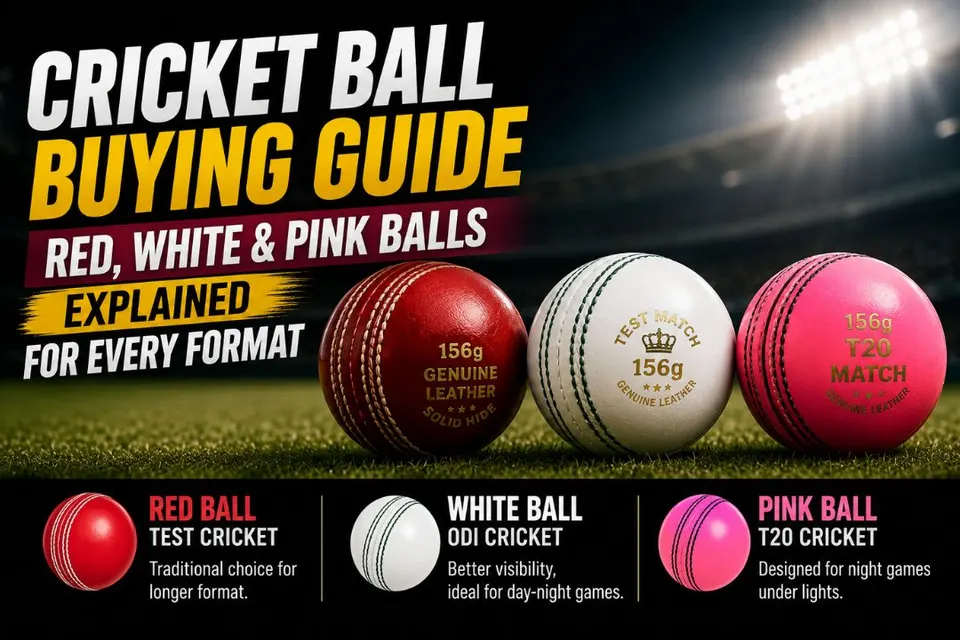
A cricket ball is not just a cricket ball. Ball type directly affects swing, seam movement, spin, pace, and durability. In this cricket ball buying guide, we explain the difference between red, white, and pink leather balls, when to use each, and which practice balls are best for net sessions and training drills. Whether you are buying for a match or a net session, this guide will help you choose the right cricket balls for your purpose.
The red cricket ball is used in Test cricket and most forms of first-class cricket. It is traditionally stitched with six rows of seam and treated with red dye. Red balls age well — swinging conventionally in early overs, then reverse swinging beautifully from the 45th over onwards as the lacquer wears off asymmetrically. Best for club cricket, multi-day matches, and serious practice. Top picks: SG Club Red, SF County Crown Red. Explore all red cricket balls at SportsGear24x7.
The white cricket ball is used in all forms of ODI and T20 cricket. It is manufactured to the same basic specification as a red ball but dyed white for visibility under floodlights. White balls swing more than red balls in their early overs but lose their shape and swing characteristics faster. Best for T20 matches, ODI-format club games, and day-night matches. Top pick: SF County Crown White. Browse white cricket balls for match and practice use.
The pink cricket ball was introduced for day-night Test cricket where the red ball becomes invisible in twilight conditions under floodlights. The pink ball uses a different dye treatment and lacquer system that maintains visibility under artificial light while providing similar seam and swing characteristics to the red ball.
SG (Sanspareils Greenlands) is the official ball supplier for Indian domestic cricket and the only ball used in domestic matches sanctioned by the BCCI. Their leather balls are made from premium alum-tanned leather with a hand-stitched seam. The SG Club Red and SG Shield are among the best value cricket balls for club and academy use in India.
• SG Club Red: Entry-level match ball. Excellent for club cricket and serious practice sessions.
• SG Ace Light: Slightly lighter ball used in junior and youth cricket formats.
SF County Crown balls are well-regarded for their pronounced seam and consistent lacquer coating — a favourite for medium-pace and swing bowlers. The SF County Crown Red provides excellent swing in humid conditions. The SF County Crown White is a good option for limited overs club cricket.
For net sessions with leather balls, slightly older or worn match balls are ideal. The ball no longer swings and allows batters to face genuine pace without the variable swing that makes match-ball nets difficult.
Synthetic balls are the most widely used cricket balls for beginners and recreational play. Ideal for children learning to bat and bowl, recreational cricket, and indoor net sessions. DSC produces a synthetic hanging ball for solo batting drill practice.
Use Case | Recommended Ball | Brand |
Test / Multi-day club cricket | Red leather ball | SG Club Red, SF County Crown |
T20 / ODI format club cricket | White leather ball | SF County Crown White |
Beginners / School cricket | Lighter leather ball | SG Ace Light |
Indoor nets | Synthetic | DSC Synthetic |
Solo batting drills | Hanging synthetic ball | DSC |
Choosing the right cricket ball for your format and playing level helps you train more effectively and perform better in matches. Understanding which cricket ball suits your game is just as important as choosing the right bat.
Q1. What is the best cricket ball for practice in India?
For leather ball practice, SG Club Red is the most widely used and trusted option. For beginners and younger players, a synthetic ball or the SG Ace Light is recommended.
Q2. What is the difference between a red ball and a white ball in cricket?
Red balls are used in multi-day and first-class cricket; white balls are used in ODIs and T20s for better visibility under lights. White balls swing more initially but deteriorate faster.
Q3. Why is the pink ball used in cricket?
The pink ball is used in day-night Test cricket because the red ball is difficult to see in twilight and under floodlights. The pink dye maintains visibility across different lighting conditions.
Q4. How long does a cricket ball last?
A match leather ball is typically replaced after 80 overs in Test cricket and 50 overs in ODIs. For practice, leather balls last 3–5 intensive net sessions before losing shape and seam quality.
Q5. Can beginners use a leather cricket ball?
Yes, but beginners should start with a lighter leather ball (SG Ace Light) or a synthetic ball until they develop proper batting and bowling technique.
The SportsGear24x7 Editorial Team is a group of passionate cricket enthusiasts and equipment specialists based in New Delhi, India. With over a decade of experience in the cricket gear industry, our team has helped thousands of players — from beginners to state-level competitors — find the right equipment for their game. Every article we publish is backed by real product knowledge, on-ground player feedback, and deep understanding of the Indian cricket ecosystem.