Carbon Fibre vs Fibreglass vs Wood Pickleball Paddles: Which Material Is Best for Your Game?
Updated 6 min read


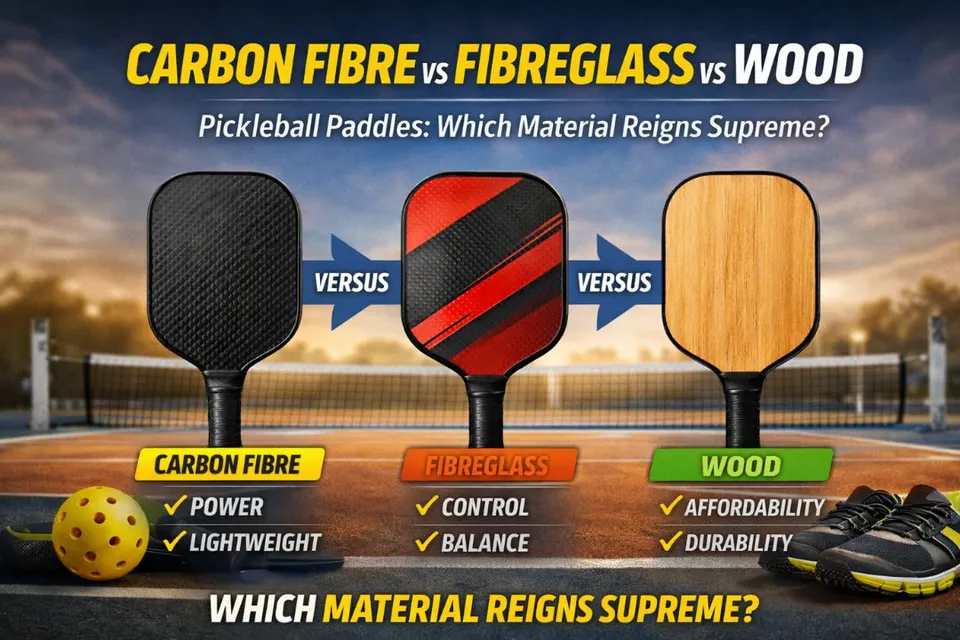
The most common question among pickleball players shopping for their first — or upgraded — paddle is this: does paddle material actually make a difference?
The short answer is yes — significantly. The material of your paddle face directly determines how the ball feels on contact, how much power you can generate, how much control you have, and how long your paddle lasts.
In India's rapidly growing pickleball community, carbon fibre, fibreglass, and wood paddles are the three main material categories you will encounter. This guide breaks down each one honestly — so you can match your paddle to your game, not just your budget.
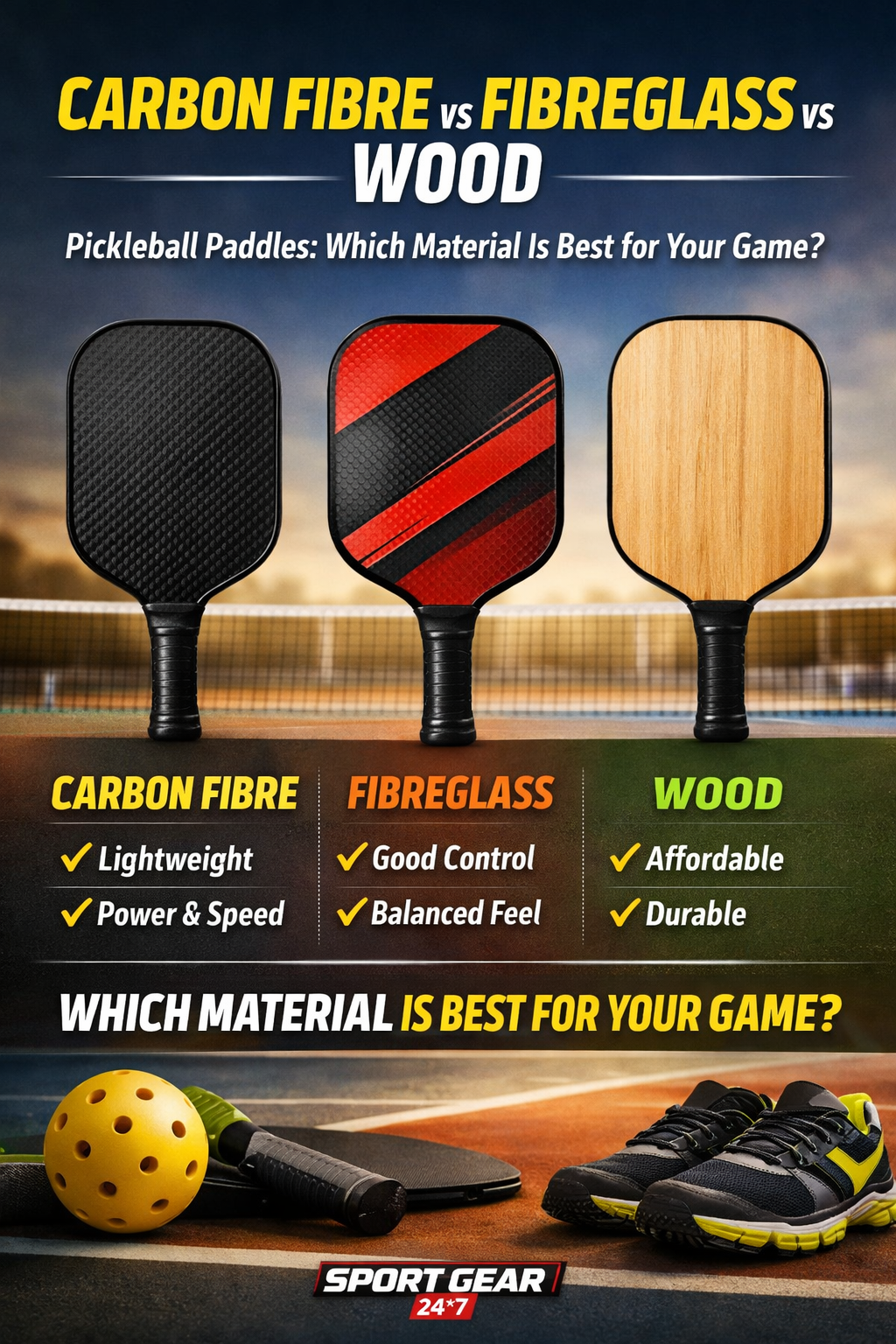 How Paddle Material Affects Performance
Before diving into each material, it helps to understand what paddle face material actually controls in pickleball.
According to USA Pickleball's equipment standards, approved paddles must meet specific surface texture and deflection standards. Within those standards, the face material affects:
Power: How much energy transfers from the paddle to the ball on contact
Control: How precisely you can direct the ball, especially on dink shots
Touch / Feel: How clearly you sense ball contact — important for spin and placement
Vibration: How much impact force travels into your wrist and arm
Durability: How long the paddle face maintains its performance characteristics
Price Range in India: ₹500 – ₹1,500
Weight: Heaviest (typically 400g+)
Wood paddles are the original pickleball paddle material — the game was literally invented with wooden paddles in 1965. They are still widely available and are the most affordable option on the market.
Strengths:
Extremely durable — resist cracking and surface damage well
Cheapest entry point into the sport
Readily available across India
Weaknesses:
Heavy — causes arm fatigue quickly and can contribute to elbow strain with extended play
Less responsive face — power and control both suffer compared to composite materials
No spin generation — the smooth wood surface does not engage the ball effectively
No vibration dampening — impacts are felt directly in the wrist and elbow
Best for: Complete beginners playing casually for the first time, or community pickleball setups where paddles are shared and durability is the priority over performance.
Verdict: Wood paddles are a starting point, not a destination. Once you decide you enjoy the sport, upgrade immediately.
Price Range in India: ₹2,000 – ₹6,000
Weight: Medium (typically 220–260g)
Fibreglass (also called glass fibre or composite) paddles represent the best value performance upgrade from wood. The fibreglass face is flexible, which creates a slight "trampoline effect" — the paddle face deflects slightly on contact and then springs back, adding power to your shots.
Strengths:
Excellent power generation — the flex face adds natural pop to ground strokes and smashes
Good ball feel and touch — better than wood for dinks and soft shots
Lighter than wood — significantly more comfortable for extended play
Affordable step up from wood — strong performance at a moderate price
Good for beginners transitioning to competitive play
Weaknesses:
Less control than carbon fibre — the flex that generates power also slightly reduces directional precision
Less spin potential than carbon fibre — the textured carbon surface generates more friction
Best for: Beginner-to-intermediate players who want a genuine performance paddle without paying premium prices. The fibreglass paddle is the sweet spot for most Indian players starting their pickleball journey.
Verdict: The best value pickleball paddle material for Indian players in 2026 — especially for those playing 2–4 times per week at the recreational or club level.
Price Range in India: ₹4,500 – ₹15,000+
Weight: Lightest (typically 200–240g)
Carbon fibre paddles are the current high-performance standard in competitive pickleball worldwide. The raw carbon surface is textured at a microscopic level, which creates friction between the paddle face and the ball — enabling significantly greater spin generation than fibreglass or wood.
Strengths:
Maximum control — the stiff carbon face allows precise shot placement with minimal deflection
Highest spin potential — textured carbon generates more ball rotation than any other material
Excellent touch for dink battles — stiffness translates directly into feel and precision
Lightest weight — reduces arm fatigue during long matches
Best for kitchen-dominant, control-based playing styles
Weaknesses:
Less natural power than fibreglass — the stiffer face does not flex, so power must come from swing technique
Higher price — quality carbon fibre paddles are a significant investment
Requires good technique to maximise — beginners may not notice the advantages immediately
Best for: Intermediate to advanced players with developed technique who prioritise control, spin, and kitchen play over raw power.
Verdict: The best pickleball paddle material for competitive players. If you play 4+ times per week and are working on your game seriously, carbon fibre is worth the investment.
Factor | Wood | Fibreglass | Carbon Fibre |
|---|---|---|---|
Price (India) | ₹500–₹1,500 | ₹2,000–₹6,000 | ₹4,500–₹15,000+ |
Power | Low | High | Medium |
Control | Low | Medium | High |
Spin | Low | Medium | High |
Touch / Feel | Low | Good | Excellent |
Weight | Heavy | Medium | Light |
Best For | Casual beginners | Intermediate players | Advanced players |
Just starting out, playing casually: Fibreglass — skip wood and buy a real performance paddle
Progressing rapidly, playing club-level: Carbon fibre — the investment pays off quickly
Kids or shared community paddles: Wood — durability over performance
Browse our full pickleball paddle and equipment range at SportsGear24x7.
For more help choosing the right paddle, read: How to Choose the Best Pickleball Paddle for Your Playing Style and Budget.
Tips: Improve Your Skills with Drills and Gear Choices.
Q1. Is a carbon fibre pickleball paddle better than fibreglass?
Carbon fibre paddles offer more control and spin than fibreglass paddles, while fibreglass paddles offer more power through natural flex. Carbon fibre is better for experienced, control-focused players, while fibreglass suits players who want power and feel without the high price of carbon. Neither is universally better — the right choice depends on your playing style and skill level.
Q2. Are wood pickleball paddles good for beginners?
Wood paddles are adequate for absolute beginners trying the sport for the very first time, but they are heavy, lack performance, and can cause arm fatigue. Most coaches recommend transitioning to a fibreglass paddle as soon as you decide to play regularly — even after just a few sessions.
Q3. What pickleball paddle material generates the most spin?
Carbon fibre generates the most spin in pickleball. The textured raw carbon surface creates friction between the face and the ball on contact, enabling topspin and backspin shots that are significantly harder to generate with fibreglass or wood paddles.
Q4. How much should I spend on a pickleball paddle in India in 2026?
For a beginner in India, a fibreglass paddle in the ₹2,500–₹4,000 range offers excellent performance at a fair price. Intermediate and advanced players should budget ₹5,000–₹10,000 for a quality carbon fibre paddle that will genuinely improve their game. Avoid spending under ₹1,500 unless you are buying a wood paddle specifically for casual or community use.
Q5. What is the best pickleball paddle for Indian beginners in 2026?
For Indian beginners in 2026, a mid-weight fibreglass paddle in the ₹2,000–₹4,000 range is the ideal starting point. It offers enough power for engaging play, good touch for developing dink and kitchen skills, and sufficient durability to last through the learning phase. Once you are playing regularly and developing a defined playing style, transitioning to a carbon fibre paddle for more control is the natural next step.
The SportsGear24x7 Editorial Team is a group of passionate cricket enthusiasts and equipment specialists based in New Delhi, India. With over a decade of experience in the cricket gear industry, our team has helped thousands of players — from beginners to state-level competitors — find the right equipment for their game. Every article we publish is backed by real product knowledge, on-ground player feedback, and deep understanding of the Indian cricket ecosystem.