Best Cricket Bat for Defensive Players in Match Play
4 min read


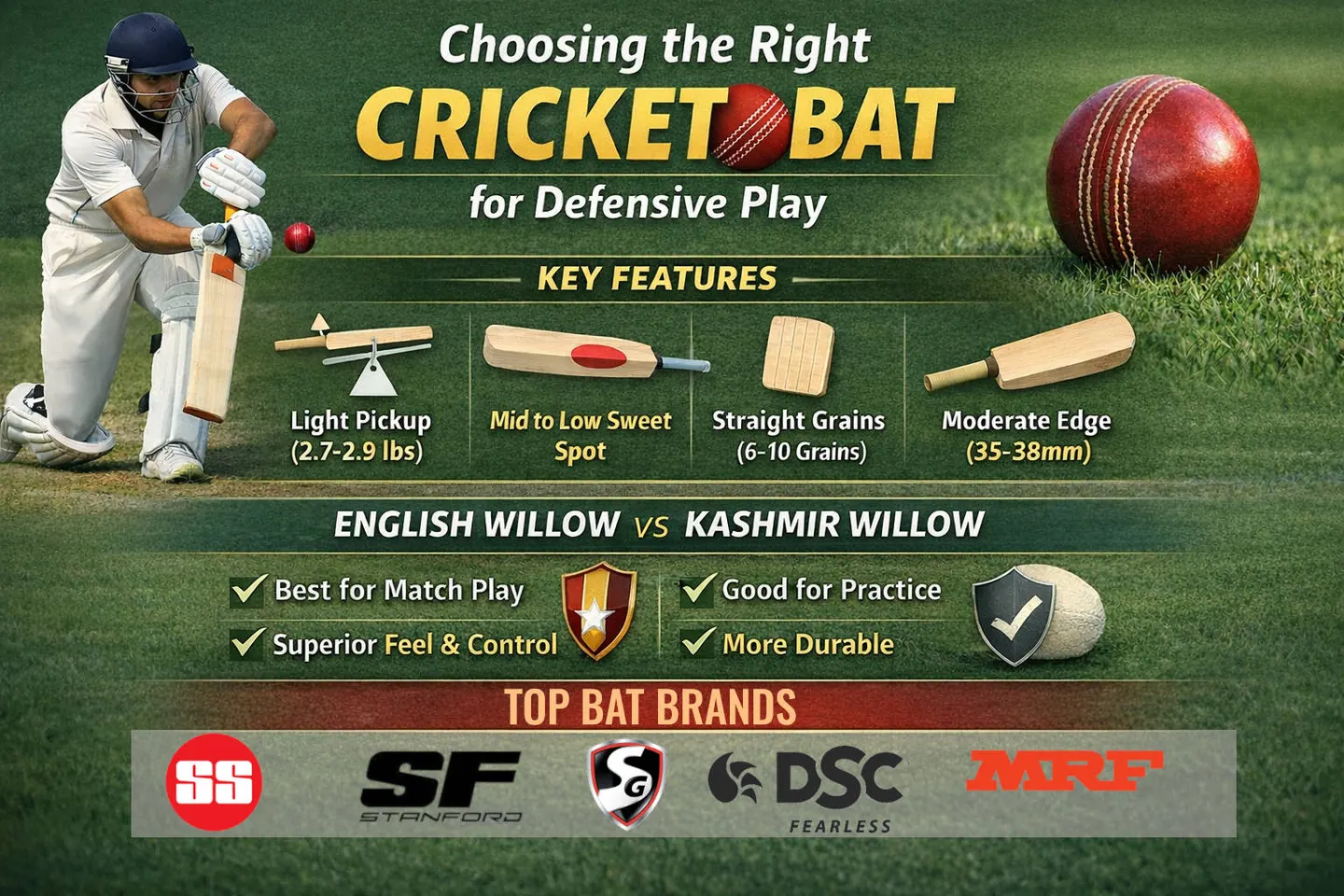
Not every match-winning knock is built on sixes and switch hits. In long-format cricket and pressure situations, solid defense, patience, and control win matches. If you’re a player who values timing over power and survival over slogging, choosing the right cricket bat for defensive play is absolutely crucial.
In this blog, we’ll break down what makes a cricket bat ideal for defensive players, which bat specs matter most, and the best bat recommendations for match play, especially for Test cricket, red-ball formats, and anchor roles.
A defensive player typically:
Plays late and close to the body
Focuses on straight drives, blocks, and soft hands
Prioritizes wicket preservation
Excels in red-ball and longer formats
For such players, bat balance, pickup, and control matter far more than raw hitting power.
Defensive players need easy maneuverability to adjust late.
Helps in soft defense
Better reaction to swing and seam
Ideal bat weight: 2.7 – 2.9 lbs
A mid or mid-low sweet spot offers:
Better control for front-foot defense
Safer straight drives
Stability against good-length deliveries
High sweet spots are better for T20 hitters—not defenders.
Straight grains indicate:
Better bat balance
Consistent rebound
Predictable ball response
Look for 6–10 straight grains for match reliability.
Thick edges aren’t necessary for defensive play.
35–38 mm edges = better control
Reduced mistimed edges flying to slips
A slightly oval handle allows:
Better bat face control
Softer hands while defending
Feature | English Willow | Kashmir Willow |
Touch & Feel | ⭐⭐⭐⭐⭐ | ⭐⭐⭐ |
Control | ⭐⭐⭐⭐⭐ | ⭐⭐⭐⭐ |
Durability | ⭐⭐⭐⭐ | ⭐⭐⭐⭐⭐ |
Match Play | ✅ Best | Good for practice |
Verdict: Serious match players should prefer English willow for better feel and control.
Flat face
Slight curve
Minimal concaving
Balanced spine
Smooth pickup
Too much bow
Excessive edge thickness
Bottom-heavy T20 bats
The following brands are well-known for producing balanced, match-ready bats ideal for defensive players:
SG – Traditional shapes, excellent balance
SS – Controlled pickup, classic profiles
MRF – Premium English willow, trusted by professionals
DSC – Great balance at competitive pricing
These brands focus on control-first bat design, perfect for anchoring an innings.
English Willow Grade 1 or 2
Mid sweet spot
Slightly oval handle
Balanced English Willow
Mid-low sweet spot
Medium edges
Grade 2 or 3 English Willow
Focus on durability + control
Many players overspend on power bats when their style demands precision.
A ₹12,000 well-balanced bat will outperform a ₹30,000 power bat if it matches your technique.
Proper knocking-in (very important)
Use anti-scuff sheet
Avoid wet conditions
Oil lightly (only when needed)
Store horizontally in a bat cover
A well-maintained bat can last multiple seasons.
7–2.9 lbs weight
Mid or mid-low sweet spot
Balanced pickup & straight grains
Heavy T20-style bats
Very thick edges
Bottom-heavy designs
For authentic, match-quality cricket bats with expert guidance, shop at SportsGear24x7.
Bats selected by playing style
Trusted brands only
Options for club to professional players
If your game is built on patience, technique, and temperament, the right bat will help you bat long and bat smart.
Q1. What type of cricket bat is best for defensive players in match play?
A balanced English willow cricket bat with a mid or mid-low sweet spot is ideal for defensive players, as it offers better control and soft touch.
Q2. Is a lightweight bat better for defensive batting?
Yes. Bats with light pickup (2.7–2.9 lbs) allow defensive players to play late, adjust to swing, and defend comfortably for long periods.
Q3. Should defensive players use thick-edge cricket bats?
No. Defensive players benefit more from moderate edges (35–38 mm), which reduce mistimed edges and improve bat control.
Q4. Is English willow better than Kashmir willow for match defense?
English willow is preferred for match play because it provides better feel, timing, and consistency, especially in red-ball cricket.
Q5. Which bat handle is best for defensive technique?
A slightly oval handle is best, as it improves grip control and helps maintain a straight bat face while defending.
The SportsGear24x7 Editorial Team is a group of passionate cricket enthusiasts and equipment specialists based in New Delhi, India. With over a decade of experience in the cricket gear industry, our team has helped thousands of players — from beginners to state-level competitors — find the right equipment for their game. Every article we publish is backed by real product knowledge, on-ground player feedback, and deep understanding of the Indian cricket ecosystem.