Babolat Tennis at SportsGear24x7: Racquets & Gear for Every Level of Player
5 min read


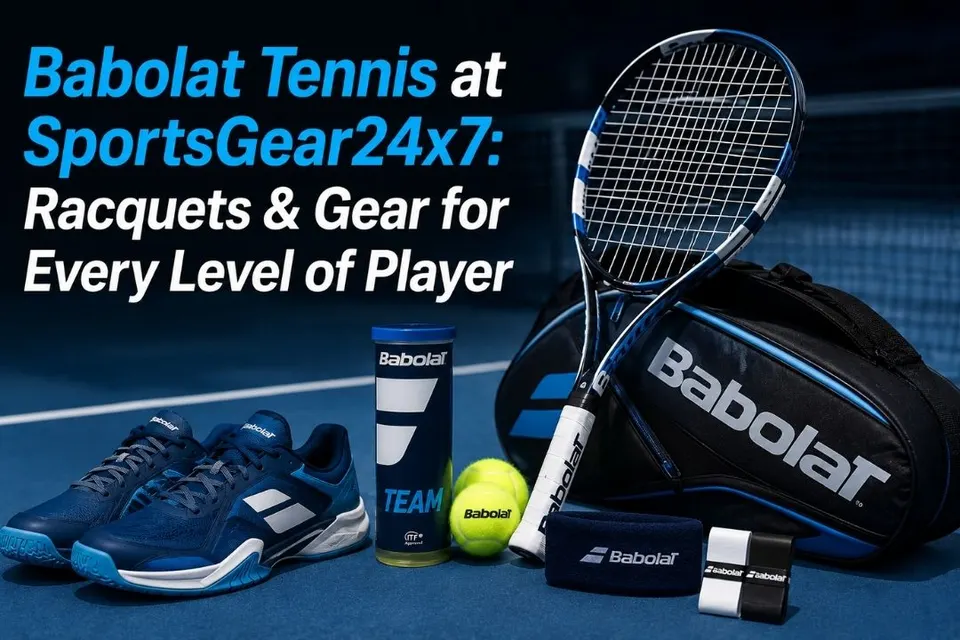
Tennis is one of the most equipment-sensitive sports there is — the right racquet, string tension, and grip size don’t just affect comfort, they directly affect how consistently you hit the ball. SportsGear24x7 has brought Babolat, the oldest and one of the most trusted names in racquet sports, into its range — engineered, as the brand puts it, “for every level of the game,” from first-time juniors to tour-proven performance. Here’s what that means for your buying decision.
Unlike a lot of sports equipment, a poorly matched tennis racquet doesn’t just feel wrong — it actively works against your technique. A racquet that’s too heavy for a junior player slows their swing and builds bad habits. A frame that’s too stiff for a beginner transmits shock straight into the arm, contributing to the wrist and elbow strain that ends a lot of new players’ interest in the sport within a season. Getting the fundamentals right from the first purchase matters more in tennis than almost any other racquet sport.
Babolat has been making racquet sport equipment since 1875, longer than any other company in the category, and its current line-up — headlined by racquets like the Pure Drive and Pure Aero families used on professional tours — is built around a simple design philosophy: give players at every level access to the same core technology, scaled to their game.
• Racquets engineered across power, control, and spin-oriented profiles, so players can choose based on their actual playing style rather than a one-size-fits-all frame.
• Strings, an area where Babolat has genuine specialist heritage — the company invented gut string manufacturing and remains a leading name in polyester and hybrid string setups used by competitive players.
• A full ecosystem of gear spanning bags, grips, and accessories designed to work together rather than as disconnected add-ons.
1. Racquet weight and head size. Heavier racquets generally offer more stability and power at the cost of manoeuvrability; larger head sizes offer a bigger sweet spot, which is particularly forgiving for newer players still developing consistent contact.
2. Grip size. An incorrectly sized grip is one of the most common — and most fixable — causes of discomfort and reduced control in tennis. Getting this right matters as much as the racquet model itself.
3. String tension. Higher tension generally favours control; lower tension favours power and a more forgiving feel. New players are often better served starting slightly looser, then adjusting as their technique develops.
4. Junior vs adult sizing. Junior racquets are shorter and lighter, scaled specifically to a developing player’s height, strength, and swing mechanics — an adult racquet cut down or handed down doesn’t replicate this properly.
• First-time juniors, where a correctly sized, lightweight racquet builds the technical foundation that carries into every year of play afterward.
• Beginners and returning adult players, who benefit from more forgiving, power-oriented frames with a larger sweet spot while technique is still developing.
• Club-level and competitive players, ready to move toward control-oriented frames and tour-inspired string setups as their game becomes more consistent.
SportsGear24x7 has introduced the Babolat Tennis range — racquets, strings, and gear “trusted by champions,” positioned specifically to serve players from first-time juniors through competitive club level. Visit SportsGear24x7 to see the current Babolat Tennis collection featured on the homepage, or reach out directly for personalised racquet and string recommendations.
For the fastest, most accurate buying guidance right now: call or WhatsApp the SportsGear24x7 team at +91 90397 99030, or email care@sportsgear24x7.com. Because racquet weight, grip size, and string tension all need to be matched to your height, strength, and playing style, a two-minute conversation with their team will get you to the right setup faster than browsing alone — especially while the tennis catalog is newly expanding.
• Get your grip size measured, don’t estimate it. A simple hand-length check against a grip size chart takes a minute and prevents months of unnecessary discomfort.
• String tension isn’t “set and forget.” Strings lose tension over time even without breaking — regular players should expect to restring periodically, not just after a snap.
• Junior players should size up gradually, not jump straight to an adult racquet. Progressing through appropriately sized junior racquets as a child grows protects both technique and enjoyment of the game.
• Protect your racquet in a proper cover or bag, especially in India’s heat and humidity, which can affect string tension and grip material faster than temperate climates.
Player Type | What to Prioritise |
First-time junior | Lightweight, correctly sized junior racquet |
Beginner adult | Larger head size, more forgiving power profile |
Club-level player | Balanced power/control frame, properly fitted grip |
Competitive player | Control-oriented frame, tour-inspired string setup |
Tennis rewards players whose equipment actually matches their game — and with Babolat now part of the SportsGear24x7 range, that match is easier to make, whether you’re buying a junior’s very first racquet or restringing ahead of a competitive season. If you’re unsure where to start, the fastest path to the right setup is a direct conversation with SportsGear24x7’s team rather than guessing from specs alone.
Ready to find your racquet? Head to SportsGear24x7 to explore the Babolat Tennis range, or call +91 90397 99030 for personalised advice before you buy.
Q: What size racquet should a junior player start with?
Junior racquet sizing is based on the child’s height, typically ranging from around 19 inches for very young beginners up to 25–26 inches as they approach adult height — a fitting conversation with SportsGear24x7’s team will get this right rather than guessing.
Q: Is a heavier or lighter racquet better for beginners?
Generally, a lighter racquet with a larger head size is more forgiving for beginners, offering a bigger sweet spot and easier manoeuvrability while technique is still developing.
Q: How often should tennis strings be replaced?
As a rough guide, restring at least as many times per year as you play per week (a common industry rule of thumb), though tension loss and visible wear are more reliable signals than a fixed schedule.
Q: Does SportsGear24x7 offer stringing services?
For current stringing service availability, contact the SportsGear24x7 team directly at +91 90397 99030 or care@sportsgear24x7.com, since service offerings can change as the tennis range expands.
The SportsGear24x7 Editorial Team is a group of passionate cricket enthusiasts and equipment specialists based in New Delhi, India. With over a decade of experience in the cricket gear industry, our team has helped thousands of players — from beginners to state-level competitors — find the right equipment for their game. Every article we publish is backed by real product knowledge, on-ground player feedback, and deep understanding of the Indian cricket ecosystem.